Between Anarchy and Tyranny


the AZEL

PERSPECTIVE

Commentary on Cuba's Future, U.S. Foreign Policy & Individual Freedoms - Issue 163
 

Between Anarchy and Tyranny

Share
Tweet
Forward
Democracy may be defined in many descriptive ways such as, government by the people, rule of the majority, a belief in freedom and equality, and more. But I find it conceptually helpful to reflect on democracy as a form of government between the violence of anarchy and the violence of tyranny.
Cognitive psychologist, Steven Pinker puts it this way: “One can think of democracy as a form of government that threads the needle, exerting just enough force to prevent people from preying on each other without preying on the people itself. A good democratic government allows people to pursue their lives in safety, protected from the violence of anarchy, and in freedom, protected from the violence of tyranny.”

It follows that, not having a ruler, and enjoying maximum individual freedoms would be preferable if we could avoid the violence of anarchy. But human history shows chaos to be deadlier than tyranny, and thus we have invented a form of government “that threads the needle” between the violence of anarchy and the violence of tyranny.

Today, by some metrics, over 50 percent of the world’s population lives in democratic nations.  In practice, however, some of those nations may be more autocratic than democratic. We also find some autocracies of the Singapore type, and some repressive democracies, such as Pakistan. The sobriquet of benevolent dictator has been used to describe authoritarian leaders who exercised absolute political power such as Josip Tito (Yugoslavia), Mustafa Kemal Atatürk (Turkey), Lee Kuan Yew (Singapore) and others.

A practical distinction can also be made between those democracies which do not go much beyond limiting the power of the government on its citizens, and those democracies more actively committed to carrying out the will of the majority of the citizenry.  For instance, the American political system is more populist than the political systems of other more aristocratic or elitist Western democracies.

Despite its shortcomings, democracy is, as exquisitely described by Winston Churchill in a speech to The House of Commons: “Many forms of government have been tried, and will be tried in this world of sin and woe. No one pretends that democracy is perfect or all-wise. Indeed, it has been said that democracy is the worst form of Government except all those other forms that have been tried from time to time.”

Yet, tyranny still has its advocates, particularly among declinists who articulate zealous politico-economic opinions without bothering with the evidence. And by those, complacent in their hopefulness that not much work effort is required from them because a paternalistic tyrant with a master plan will improve their lives, as in China, Cuba, Iran, North Korea, or Vietnam.

Economist Paul Romer makes an instructive distinction between complacent optimism and conditional optimism. He likens complacentoptimism to that of a child waiting for presents on Christmas morning. Other than obedient behavior, nothing much is required of the child.  Whereas conditional optimism is the sentiment of a child who “wants a treehouse and realizes that if he gets some wood and nails and persuades other kids to help him, he can build one.” Democracy requires conditional optimism and tyranny demands complacent optimism.

Perhaps the most misunderstood, and criticized, aspect of democratic governments is their electoral processes, as Pinker points out: “Political scientists are repeatedly astonished by the shallowness and incoherence of people’s political beliefs, and by the tenuous connection of their preferences to their votes…”  A considerable degree of apathy and ignorance seems to be part of many democratic processes.

The Austrian-British philosopher Karl Popper, generally regarded as one of the greatest philosophers of the 20th century, offered a brilliantly simplistic way to think of democratic governance.  Typically, we think of democracy, and its electoral process, as a form of government that answers the question:  Who should rule? Popper offered instead that we should think of democracy as a system of government that offers a solution to the problem of how to get rid of bad leaders without bloodshed.

Replacing bad leaders without violence is how democracy threads the needle between the violence of anarchy and the violence of tyranny.

Please let us know if you Like Issue 163 - Between Anarchy and Tyranny on Facebook this article.
We welcome your feedback.
Abrazos,
 
Lily & José
 
(click on the name to email Lily or Jose)
José Azel, Ph.D.
José Azel left Cuba in 1961 as a 13 year-old political exile in what has been dubbed Operation Pedro Pan - the largest unaccompanied child refugee movement in the history of the Western Hemisphere.

He is currently dedicated to the in-depth analyses of Cuba's economic, social and political state, with a keen interest in post-Castro-Cuba strategies. Formerly, a Senior Scholar at the Institute for Cuban and Cuban-American Studies (ICCAS) at the University of Miami, Jose Azel has published extensively on Cuba related topics.

In 2012 and 2015, Dr. Azel testified in the U.S. Congress on U.S.-Cuba Policy, and U.S. National Security.  He is a frequent speaker and commentator on these and related topics on local, national and international media.  He holds undergraduate and masters degrees in business administration and a Ph.D. in International Affairs from the University of Miami.

José along with his wife Lily are avid skiers and adventure travelers.  In recent years they have climbed Grand Teton in Wyoming, trekked Mt. Kilimanjaro in Tanzania and Machu Pichu in Peru.  They have also hiked in Tibet and in the Himalayas to Mt. Everest Base Camp.

They cycled St. James Way (
El Camino de Santiago de Compostela) and cycled alongside the Danube from Germany to Hungary. They have scuba dived in the Bay Islands off the Honduran coast and in the Galapagos Islands.

Their adventurers are normally dedicated to raise funds for causes that are dear to them. 
Watch Joe & Lily summit Kilimanjaro.

Books by Dr. José Azel
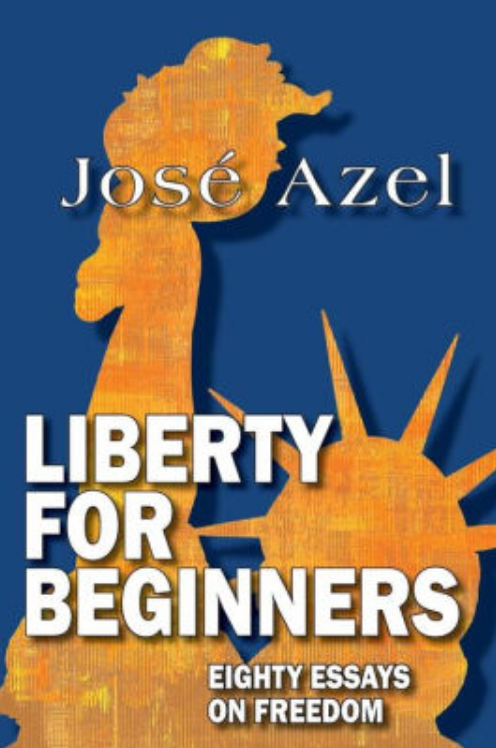
"Liberty for beginners is much more than what the title promises. It is eighty themes touched with the wisdom of a master, and the charm of an excellent communicator. Anyone that wishes to understand why countries do, or do not progress, will find in this book the best explanations.
If it was in my power, this work would be required reading for all college and university students, and I would recommend its reading to politicians, journalists, and policymakers. With this book Azel accomplishes what was achieved in France by Frédéric Bastiat, and in the United States by Henry Hazlitt: brings together common sense with intelligent observation, and academic substance. Stupendous"
Carlos Alberto Montaner
"Libertad para novatos es mucho más de lo que promete el título. Son ochenta temas tocados con la sabiduría de un maestro y la amenidad de un excelente comunicador. Cualquier adulto que desee saber por qué progresan o se estancan los pueblos aquí encontrará las mejores explicaciones.
Si estuviera en mis manos, esta obra sería lectura obligatoria de todos los estudiantes, tanto de bachillerato como universitarios, pero, además, se la recomendaría a todos los políticos y periodistas, a todos los policy makers. Azel logra con este libro lo que Frédéric Bastiat consiguiera en Francia y Henry Hazlitt en Estados Unidos: aunar el sentido común, la observación inteligente y la enjundia académica. Estupendo."
Carlos Alberto Montaner
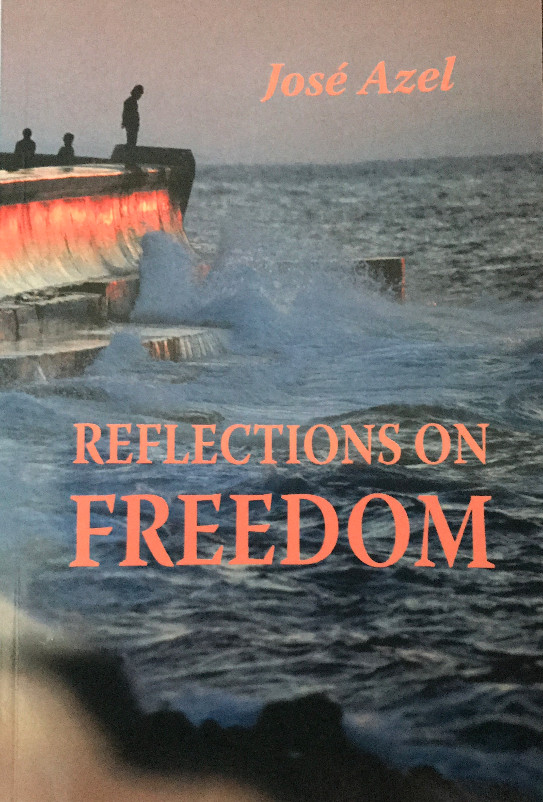
In Reflections on FreedomJosé Azel brings together a collection of his columns published in prestigious newspapers.  Each article reveals his heartfelt and personal awareness of the importance of freedom in our lives.  They are his reflections after nearly sixty years of living and learning as a Cuban outside Cuba. In what has become his stylistic trademark, Professor Azel brilliantly introduces complex topics in brief journalistic articles.
En Reflexiones sobre la libertad José Azel reúne una colección de sus columnas publicadas en prestigiosos periódicos. Cada artículo revela su percepción sincera y personal de la importancia de la libertad en nuestras vidas. Son sus reflexiones después de casi sesenta años viviendo y aprendiendo como cubano fuera de Cuba.  En lo que ha resultado ser característica distintiva de sus artículos, el Profesor Azel introduce con brillantez complejos temas en  breves artículos de carácter periodístico.
Mañana in Cuba is a comprehensive analysis of contemporary Cuba with an incisive perspective of the Cuban frame of mind and its relevancy for Cuba's future.
Pedazos y Vacíos is a collection of poems written in by Dr. Azel in his youth. Poems are in Spanish.
To friend, follow or email author click on the icons below:
Click here to:
View this email in your browser

Access past issues
Access automated translations
Facilitate sharing
Print from your browser
Copyright © 2019 Azel & Associates, All rights reserved.
If you are receiving this email it is because we met you at some point on an adventure.

Our mailing address is:
Azel & Associates
440 Sawgrass Parkway, Suite 106
Sunrise, FL 33325

Cuba: the real cost of healthcare.

Mail from CubaArchive.org
January 2019
View this email in your browser
Vea abajo la versión en español.

Cuba’s healthcare crisis deepens 8 years after mass manslaughter at Mazorra 


In January, we especially remember the victims of a tragedy that should have never happened.  On January 11th and 12th 2010, more than two dozen patients died of hypothermia at Havana’s Psychiatric Hospital known as “Mazorra.” The weather had turned unseasonably cold, with temperatures dropping to around 40 degrees F (4.4 degrees C). The facility had many broken and missing windows and the 2,500 severely malnourished and barely-clothed patients had no blankets.

 After human rights’ defenders in Cuba alerted international public opinion, reporting close to 40 victims, the Ministry of Public Health issued a statement reporting 26 deaths and later declared that those responsible would be held accountable for the “failure to adopt timely measures to safeguard patients.” A security operative was put in place surrounding the hospital, its workers were instructed to stay silent, and no information was provided on the many patients hospitalized in critical condition.


The photographs in this report were taken at the Havana morgue where the bodies were delivered, then smuggled out of Cuba. They illustrate the state of starvation and mistreatment of the victims and the disgraceful handling of the bodies. See photos at http://www.penultimosdias  and https://profesorcastro.jimdo.com.

With public attention centered on the hospital, conditions considerably improved, at least for some time. Several administrators and workers at the hospital were sentenced to  6 to 14 years of prison in January 2011. Neighbors, however, reported that the patients had habitually begged for food in the streets surrounding the hospital and no government authority had cared to investigate. Administrators and workers had been stealing the food and supplies and abusing the patients.

 This case may be extreme only because it rarely gets so cold in Cuba and photos were smuggled out of the island. The sad truth is that many awful realities of healthcare in Cuba have long been hidden from the outer world thanks to the mammoth resources spent by Cuba’s giant apparatus for international influence and propaganda selling the illusion of Cuba’s “great, universal, and free” healthcare.

Aside from the terrible conditions, individuals have long been punished with imprisonment at Mazorra and other psychiatric facilities for their political “offenses.” Daniel Lorente, who irrupted with a large U.S. flag in the 2017 May (Labor) Day Parade in Havana, was imprisoned for months at Mazorra for his daring feat. In June 2018, the rapper Henry Laso, "El Encuyé," was held at Mazorra and other psychiatric facilities in Holguín and Sancti Spiritus for his songs critical of the regime and released months later only after going on a hunger strike. Cuba Archive´s co-founder, the late Armando M. Lago, Ph.D., together with Charles J. Brown, documented the systematic psychiatric torture of political prisoners in their 1991 publication “The Politics of Psychiatry in Revolutionary Cuba.”

As most health workers in Cuba know, the Cuban government reports manipulated health statistics and maintains a limited number of showcase first-rate facilities; most of the international community falls for the packaged narrative and guided tours without any questions. In revolutionary Cuba, there has always been a huge difference between the precarious healthcare available to average Cubans and first-rate care for the ruling elite and hard-currency paying foreigners. For most Cubans, basic medications or medical equipment and supplies are altogether lacking. Facilities are dilapidated, many literally crumbling, hygiene is severely lacking, even water is often unavailable, and the food is inadequate. Patients have to bring their own towels, pillows, bed sheets, and blankets or risk having to sleep on soiled beds stained with blood and other body fluids. The problem is so blatant that photographs are forbidden in some of the hospitals. Any cursory search on YouTube.com or in google will produce examples. See these: Sanjeev Sabhlok, “The disastrous state of the Cuban health system” published Sep 17, 2018; Belén Marty, “Inside the Cuban Hospitals That Castro Doesn’t Want Tourists to See,” Oct 18, 2016; and Free Healthcare?
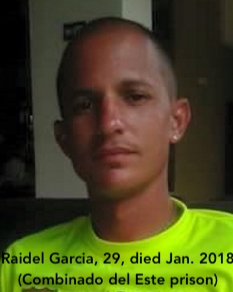

What's more, Cuba Archive has documented hundreds of deaths in Cuban prisons from medical conditions or denial of medical care. Prisoners —many young and healthy upon entering prison— often die for easily treatable conditions. Prison authorities are suspected of deliberately tampering with food and water to affect prisoners’ health and some have died in suspicious circumstances. These documented deaths are just the tip of the iceberg; the situation is known to be much worse but cannot be properly documented, as Cuba denies humanitarian agencies access to detention centers. Presently, suffering in the prisons is extreme and scores are believed to be dying annually.

To date, the horrible conditions in Venezuela's public health system with the adoption of the Cuban model are known to world public opinion, yet similarities with Cuba are not lacking. No doubt, the Maduro and Castro regimes have been counting on the international community to eventual forget or fall for the ruse, as it has with Cuba. Regardless, the cost in lives and human suffering is enormous in both countries.

One thing the Venezuelan regime seems to have not copied, at least yet, is Cuba's profit-driven healthcare model. Patients of any age requiring even the most basic medical procedure must “donate” blood “for humanitarian needs.” But the blood is used to produce products exported by the state for many millions of dollars annually. In another multimillion-dollar business, body parts from unknowing deceased donors are also sold as exports. What’s more, healthcare workers are exported in a modern slavery scheme that generates the Cuban government billions in hard currency (US$8 billion in 2017) and leaves most medical facilities in Cuba without doctors.
 

If you visit Cuba, help save lives by breaking the information blockade on “the real Cuba” 
 

If you visit Cuba, we urge you to independently walk to any neighborhood clinic or major hospital in any city, one that is not part of the “Potemkin-circuit” of showcase facilities (i.e. the vast majority of the country’s medical facilities are not). Make sure you break free from government handlers including public health officials. Do not get in the way of medical care, but discreetly take a look around; if you speak the language fluently and with a Cuban accent, ask pertinent questions to anyone around not in a position of authority. (To avoid trouble, do not speak if you don’t speak “Cuban Spanish.” ) Please send us a note on your impressions and any photographs you manage to take and let us know if we can share them (with credit to you or anonymously, as you prefer). Also, share your experience in social media, with your friends, newspaper, elected representatives, government authorities, international agencies and human rights organizations. You will be helping save lives!
Free Society Project, Inc., 2018. ©All rights reserved.
www.CubaArchive.org
  
Reproduction and redistribution of this material are authorized as long as the source is cited.

We need your support to continue this work
Please visit our How to Help page to make a donation and learn how to help
disseminate this work. Also, share it with your contacts.
Cuba Archive’s Truth and Memory Project, an initiative of the Free Society Project,
documents loss of life and human exploitation resulting from the Cuban revolution
and promotes the understanding of transitional justice issues —truth, memory, and justice.

Are You Dematerializing?


the AZEL

PERSPECTIVE

Commentary on Cuba's Future, U.S. Foreign Policy & Individual Freedoms - Issue 162
 

Are You Dematerializing?

Share
Tweet
Forward
Are you dematerializing? I ask, not because I think you are overly concerned with material possessions and should become more ascetic. Nor am I trying to find out if you are dematerializing to be tele-transported back to the Starship Enterprise after asking Scotty to beam you up.
Dematerialization in economics refers to a reduction in the quantity of materials required for economic functions. Dematerialization also means using less, or no materials, to deliver the same level of functionality in a product.  In short, dematerialization is about doing more with less. So essentially, I am asking if you are using fewer materials in your life. I had never thought much about this topic until introduced to it by neuroscientist Steven Pinker. Below, I will borrow from his presentation.

The Club of Rome, (ironically now based in Switzerland), is made up of distinguished, politicians, scientists, business leaders, and officials from governments and international organizations from around the world. It describes itself as “an organization of individuals who share a common concern for the future of humanity and strive to make a difference.” Its mission is “to promote understanding of the global challenges facing humanity and to propose solutions through scientific analysis communication and advocacy.”

In 1972, The Club of Rome published an influential report titled “The Limits of Growth.” Using sophisticated computer simulations, the report predicted a steadily increasing demand for materials as economies and population grew exponentially.  Given a finite supply of material resources, the report’s computer simulations extrapolated that the increasing demand for resources would eventually lead to an abrupt worldwide economic collapse.  The Limits of Growth report sold 30 million copies in more than 30 languages. It became the best selling environmental book in history. And it was wrong.

Current studies on the use of materials and economic growth show that, economies are growing using much less physical materials. How can this be? Here is where Dr. Pinker simplifies the complex science for us with examples we can relate to.  My old music collection, (and I suspect this is true for most of my readers) required many cubic yards of vinyl for my long-play records. In time, this material use was reduced to only cubic inches for compact disks. And now, my music collection in MP3 requires no materials.

The paper and ink used to print my daily newspapers, and the fuel used to deliver them have been replaced by my almost material-less iPad. Mobile phone systems do not require much in terms of telephone poles and wire. My extensive paper files and file cabinets are gone. My material-less files are now stored in the cloud (wherever that is). The office supply store must be missing my frequent purchases of reams of paper.

And, as Pinker remind us, “just think of all the plastic, metal, and paper that no longer go into the forty-odd products that can be replaced by a single smartphone.” This one device has replaced our old telephones, our answering machines, phone books, cameras, and camcorders, tape recorders, radios, alarm clocks, calculators, dictionaries, Rolodexes, calendars, street maps, flashlights, fax machines, scanners, compasses, and more. That is a lot of materials not being used.

You are dematerializing, and so is everyone else on the planet. Technological advances allow us to do more with less and, “The digital revolution, by replacing atoms with bits, is dematerializing the world in front of our eyes.” The world is also being dematerialized by technologies that enable the sharing of things that used to sit unused most of the time. Think of shared automobiles, unused bedrooms, power tools, etc., that Uber, Airbnb, and others are facilitating.

What I find most instructive is that, this reduction in our use or materials was not compelled. It required no government coercion. We reduced our use of materials spontaneously by the free choices made with our purchases. There is something sublime about how technological progress and free markets can decouple our personal flourishing from the material world.  We are not becoming Mahatma Gandhi-like ascetics, but we are surely dematerializing. And that is good for the planet. Beam me down, Scotty.

Please let us know if you Like Issue 162 - Are You Dematerializing? on Facebook this article.
We welcome your feedback.
Abrazos,
 
Lily & José
 
(click on the name to email Lily or Jose)
José Azel, Ph.D.
José Azel left Cuba in 1961 as a 13 year-old political exile in what has been dubbed Operation Pedro Pan - the largest unaccompanied child refugee movement in the history of the Western Hemisphere.

He is currently dedicated to the in-depth analyses of Cuba's economic, social and political state, with a keen interest in post-Castro-Cuba strategies. Formerly, a Senior Scholar at the Institute for Cuban and Cuban-American Studies (ICCAS) at the University of Miami, Jose Azel has published extensively on Cuba related topics.

In 2012 and 2015, Dr. Azel testified in the U.S. Congress on U.S.-Cuba Policy, and U.S. National Security.  He is a frequent speaker and commentator on these and related topics on local, national and international media.  He holds undergraduate and masters degrees in business administration and a Ph.D. in International Affairs from the University of Miami.

José along with his wife Lily are avid skiers and adventure travelers.  In recent years they have climbed Grand Teton in Wyoming, trekked Mt. Kilimanjaro in Tanzania and Machu Pichu in Peru.  They have also hiked in Tibet and in the Himalayas to Mt. Everest Base Camp.

They cycled St. James Way (
El Camino de Santiago de Compostela) and cycled alongside the Danube from Germany to Hungary. They have scuba dived in the Bay Islands off the Honduran coast and in the Galapagos Islands.

Their adventurers are normally dedicated to raise funds for causes that are dear to them. 
Watch Joe & Lily summit Kilimanjaro.

Books by Dr. José Azel
"Liberty for beginners is much more than what the title promises. It is eighty themes touched with the wisdom of a master, and the charm of an excellent communicator. Anyone that wishes to understand why countries do, or do not progress, will find in this book the best explanations.
If it was in my power, this work would be required reading for all college and university students, and I would recommend its reading to politicians, journalists, and policymakers. With this book Azel accomplishes what was achieved in France by Frédéric Bastiat, and in the United States by Henry Hazlitt: brings together common sense with intelligent observation, and academic substance. Stupendous"
Carlos Alberto Montaner
"Libertad para novatos es mucho más de lo que promete el título. Son ochenta temas tocados con la sabiduría de un maestro y la amenidad de un excelente comunicador. Cualquier adulto que desee saber por qué progresan o se estancan los pueblos aquí encontrará las mejores explicaciones.
Si estuviera en mis manos, esta obra sería lectura obligatoria de todos los estudiantes, tanto de bachillerato como universitarios, pero, además, se la recomendaría a todos los políticos y periodistas, a todos los policy makers. Azel logra con este libro lo que Frédéric Bastiat consiguiera en Francia y Henry Hazlitt en Estados Unidos: aunar el sentido común, la observación inteligente y la enjundia académica. Estupendo."
Carlos Alberto Montaner
In Reflections on FreedomJosé Azel brings together a collection of his columns published in prestigious newspapers.  Each article reveals his heartfelt and personal awareness of the importance of freedom in our lives.  They are his reflections after nearly sixty years of living and learning as a Cuban outside Cuba. In what has become his stylistic trademark, Professor Azel brilliantly introduces complex topics in brief journalistic articles.
En Reflexiones sobre la libertad José Azel reúne una colección de sus columnas publicadas en prestigiosos periódicos. Cada artículo revela su percepción sincera y personal de la importancia de la libertad en nuestras vidas. Son sus reflexiones después de casi sesenta años viviendo y aprendiendo como cubano fuera de Cuba.  En lo que ha resultado ser característica distintiva de sus artículos, el Profesor Azel introduce con brillantez complejos temas en  breves artículos de carácter periodístico.
Mañana in Cuba is a comprehensive analysis of contemporary Cuba with an incisive perspective of the Cuban frame of mind and its relevancy for Cuba's future.
Pedazos y Vacíos is a collection of poems written in by Dr. Azel in his youth. Poems are in Spanish.
To friend, follow or email author click on the icons below:
Click here to:
View this email in your browser

Access past issues
Access automated translations
Facilitate sharing
Print from your browser
Copyright © 2019 Azel & Associates, All rights reserved.
If you are receiving this email it is because we met you at some point on an adventure.

Our mailing address is:
Azel & Associates
440 Sawgrass Parkway, Suite 106
Sunrise, FL 33325