The Montaigne Dogma


the AZEL

PERSPECTIVE

Commentary on Cuba's Future, U.S. Foreign Policy & Individual Freedoms - Issue 184
 

The Montaigne Dogma

Share
Tweet
Forward
Michel de Montaigne (1533-1592), who devised the essay as a literary genre, was one of the most erudite and sceptic humanist philosophers of the XVI century. He personified the French Renaissance’s spirit of freely embracing doubts.  Admired as a statesman, and author of three books of Essays, he coined the sceptic motto: What do I know? Montaigne has had a direct influence on Western thinkers including Francis Bacon, René Descartes, Blaise Pascal, Jean-Jacques Rousseau, and many others.
But perhaps his most widespread and toxic influence has been by what Austrian School economist Ludwig von Mises labeled as the “Montaigne dogma.” In a brief chapter of his Essays, Montaigne claims that “…no profit whatever can possibly be made but at the expense of another...” Montaigne applied this same belief to trade between nations.  This fallacious idea that the gain of some must be at the loss of others, has become known as the Montaigne dogma. It is an idea that continues to find its way into political discourse and lawmaking. And yet, it is demonstrably false.

At first consideration, the proposal that the gain of some must be at the loss of others seems in line with our everyday experience. In sports, when one team wins, the adversary loses; the same is true in political campaigns, military conflicts, court cases, and many other instances. These are examples of zero-sum games where, indeed, the gain of one must be the loss of another.

But in these examples we are considering an ex post, or after the fact, evaluations of the events.  Before the events (ex ante), all of the participants in these examples expect to win. In voluntary exchanges, both the buyer and the seller must believe the transaction is in their best interest.  That is, they must expect to win, or they would not enter into the transaction in the first place. In a free-market gains result, not by creating stress for others, but by alleviating that stress with products and services.

If you bought this newspaper for $1.00, you and the seller both benefited from a voluntary exchange. This is because you and the seller valued the goods differently; the seller preferred your dollar, and you preferred the newspaper. In modern game-theory language this exchange results in a positive-sum, rather than a zero-sum, or negative-sum.

Economists, rely extensively on the study of human action (Praxeology) in their economic theories. Praxeology is based on the concept that we engage in purposeful behavior rather than in reflective behavior such as sneezing. From this idea of purposeful behavior, economist can develop an understanding of human behavior.  Our intentional behavior expresses our preferences.

Montaigne dogma fails to recognize that poverty is what results if wealth is not produced. Or as economist Peter Bauer has phrased it: “Poverty has no causes. Wealth has causes.” Poverty is what we get when we do not generate wealth. For much of human history, poverty has been the norm. It has only been a few centuries since we learned to create wealth. It is that knowhow in creating wealth that has allowed us to make progress in reducing worldwide poverty.

A graphical depiction of this phenomenon shows an uninterrupted horizontal line of human poverty for 1,800 years. It is only in the last three centuries that we see a near vertical increase in wealth. (See for instance the graphical representations of economist Max Roser in “Our World in Data”). Given that poverty is the natural occurring condition, then wealth must be produced to mitigate poverty.

The erroneous Montaigne dogma has misdirected the attention of governments into expensive and ineffectual “Wars on Poverty”, and wealth redistribution policies, rather than on strategies to promote wealth acquisition. Poverty can be reduced with policies to incentivize productivity and profit. Unfortunately, the entire regulatory and taxation frameworks of most nations demonize profits and are designed to do just the opposite.

If nations are serious about reducing poverty, they must discard the harmful Montaigne dogma and embrace passionately the freedom for citizens to create and keep wealth.

Please let us know if you Like Issue 184 - The Montaigne Dogma on Facebook this article.
We welcome your feedback.
Abrazos,
 
Lily & José
 
(click on the name to email Lily or Jose)
José Azel, Ph.D.
José Azel left Cuba in 1961 as a 13 year-old political exile in what has been dubbed Operation Pedro Pan - the largest unaccompanied child refugee movement in the history of the Western Hemisphere.

He is currently dedicated to the in-depth analyses of Cuba's economic, social and political state, with a keen interest in post-Castro-Cuba strategies. Formerly, a Senior Scholar at the Institute for Cuban and Cuban-American Studies (ICCAS) at the University of Miami, Jose Azel has published extensively on Cuba related topics.

In 2012 and 2015, Dr. Azel testified in the U.S. Congress on U.S.-Cuba Policy, and U.S. National Security.  He is a frequent speaker and commentator on these and related topics on local, national and international media.  He holds undergraduate and masters degrees in business administration and a Ph.D. in International Affairs from the University of Miami.

José along with his wife Lily are avid skiers and adventure travelers.  In recent years they have climbed Grand Teton in Wyoming, trekked Mt. Kilimanjaro in Tanzania and Machu Pichu in Peru.  They have also hiked in Tibet and in the Himalayas to Mt. Everest Base Camp.

They cycled St. James Way (
El Camino de Santiago de Compostela) and cycled alongside the Danube from Germany to Hungary. They have scuba dived in the Bay Islands off the Honduran coast and in the Galapagos Islands.

Their adventurers are normally dedicated to raise funds for causes that are dear to them. 
Watch Joe & Lily summit Kilimanjaro.

Books by Dr. José Azel
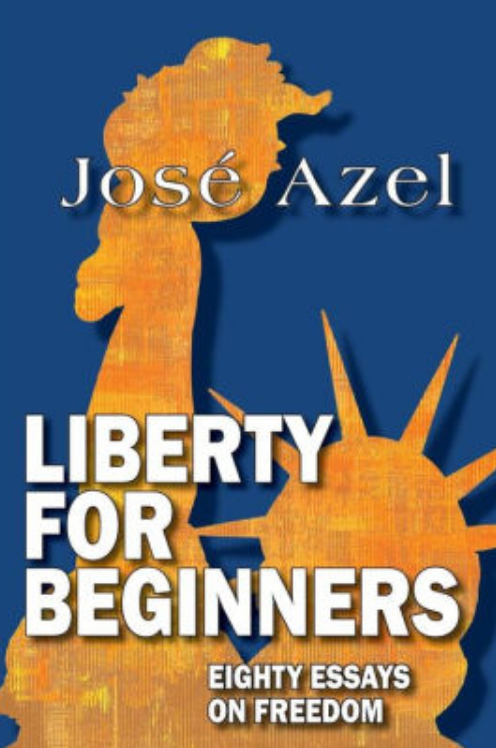
"Liberty for beginners is much more than what the title promises. It is eighty themes touched with the wisdom of a master, and the charm of an excellent communicator. Anyone that wishes to understand why countries do, or do not progress, will find in this book the best explanations.
If it was in my power, this work would be required reading for all college and university students, and I would recommend its reading to politicians, journalists, and policymakers. With this book Azel accomplishes what was achieved in France by Frédéric Bastiat, and in the United States by Henry Hazlitt: brings together common sense with intelligent observation, and academic substance. Stupendous"
Carlos Alberto Montaner
"Libertad para novatos es mucho más de lo que promete el título. Son ochenta temas tocados con la sabiduría de un maestro y la amenidad de un excelente comunicador. Cualquier adulto que desee saber por qué progresan o se estancan los pueblos aquí encontrará las mejores explicaciones.
Si estuviera en mis manos, esta obra sería lectura obligatoria de todos los estudiantes, tanto de bachillerato como universitarios, pero, además, se la recomendaría a todos los políticos y periodistas, a todos los policy makers. Azel logra con este libro lo que Frédéric Bastiat consiguiera en Francia y Henry Hazlitt en Estados Unidos: aunar el sentido común, la observación inteligente y la enjundia académica. Estupendo."
Carlos Alberto Montaner
In Reflections on FreedomJosé Azel brings together a collection of his columns published in prestigious newspapers.  Each article reveals his heartfelt and personal awareness of the importance of freedom in our lives.  They are his reflections after nearly sixty years of living and learning as a Cuban outside Cuba. In what has become his stylistic trademark, Professor Azel brilliantly introduces complex topics in brief journalistic articles.
En Reflexiones sobre la libertad José Azel reúne una colección de sus columnas publicadas en prestigiosos periódicos. Cada artículo revela su percepción sincera y personal de la importancia de la libertad en nuestras vidas. Son sus reflexiones después de casi sesenta años viviendo y aprendiendo como cubano fuera de Cuba.  En lo que ha resultado ser característica distintiva de sus artículos, el Profesor Azel introduce con brillantez complejos temas en  breves artículos de carácter periodístico.
Mañana in Cuba is a comprehensive analysis of contemporary Cuba with an incisive perspective of the Cuban frame of mind and its relevancy for Cuba's future.
Pedazos y Vacíos is a collection of poems written in by Dr. Azel in his youth. Poems are in Spanish.
To friend, follow or email author click on the icons below:
Click here to:
View this email in your browser

Access past issues
Access automated translations
Facilitate sharing
Print from your browser
Copyright © 2019 Azel & Associates, All rights reserved.
If you are receiving this email it is because we met you at some point on an adventure.

Our mailing address is:
Azel & Associates
440 Sawgrass Parkway, Suite 106
Sunrise, FL 33325

Guitar Passion

CULTURE AND COMMUNITY ASSOCIATION
PRESENTS
A selection of different styles and genres of music for guitar, from classical, Spanish, Cuban, to pop & jazz, with internationally renowned
Maestro Rafael Padron.
 
Invited artists: Matteus Cobo, Patricia Hernandez, Angela Hernandez &
Parya Rostamian.
 
Introduction and Power Point Presentation by Prof. Rhyna Moldes.
 
Previous Reception
Saturday, July 13, 2019 – 2:30 pm.   $25
*   Gibson-Bethel Com.Center (5800 S.W. 66 St.)
*  Free Parking

Info & RSVP: (305) 667-6467
 
With the support of Miami-Dade County Cultural Affairs Dept.,
the Miami-Dade Mayor and the Board of Commissioners.
This is a publication of the Cuban Studies Institute. 

Our mailing address is:
1500 South Dixie Highway, Bank of America Bldg., 2nd Floor
Coral Gables, FL  33146
Tel: 786-803-8007

What is Social Justice?


the AZEL

PERSPECTIVE

Commentary on Cuba's Future, U.S. Foreign Policy & Individual Freedoms - Issue 183
 

What is Social Justice?

Share
Tweet
Forward
Social justice looks at how a society chooses to distribute the things that we value, among them income, wealth, powers, and more. Social justice asks: What is the right thing to do? Nearly 2,500 years ago, Plato got the philosophical discussion of justice going, and we have yet to agree on an understanding. 
Contemporary philosopher Michael J. Sandel identifies three goals a society can use to guide the distribution of goods - we can either seek to maximize welfare, or to promote the virtue of the citizenry, or to respect individual freedoms. Each of these rival ideas requires a different understanding of justice, as each finds its way into our lawmaking.

The welfare idea that social justice is determined by the consequences of a policy is rooted in the philosophy of utilitarianism.  Utilitarianism holds that the right thing to do is that which maximizes welfare.  For utilitarians, a just policy is one that increases the collective happiness of society. Utilitarians believe that the highest principle of morality is to maximize happiness by weighting costs and benefits.

Alternatively, the idea that for lawmaking to be just, it should elevate the virtue of citizens reflects the Aristotelian view that the law should be interested in questions of what is a good life. According to Aristotle, the law should allocate goods so as to promote the virtues of the citizenry.  But, since there are competing conceptions of a virtuous society, our modern thinking is that, the law should neutral on this respect. The theories of justice that underpin our rights should not rely on any particular conception of virtue. Freedom requires that citizens, on their own, choose the best way to live.

Both of these ideas of social justice conflict with Professor Sandel’s third approach to justice, which defines justice as respecting freedoms and individual rights.  This is a free-market conception of justice that recognizes and safeguards our voluntary choices. Markets allow people to choose how to value the things they decide to exchange. Markets respect our individual freedoms.

The utilitarian idea that a just policy is one that increases the collective happiness of society sounds reasonable until we begin to explore its values. For example, is morality a question of calculating cost and benefits, or are there human rights above such calculations?  Utilitarian philosopher Jeremy Bentham (1748-1832) made the utilitarian position clear when he scorned natural rights calling them “nonsense upon stilts.”  Utilitarianism can not respect individual rights given its focus on the “greatest happiness.”

In our society, these philosophical concepts are best illustrated by policies that tax the rich disproportionally to purportedly help the poor. Let’s use taxation as an example.  According to the Internal Revenue Service, our tax policies in 2014 showed that:

The share of income earned by the top 1 percent of taxpayers was 20.6 percent. But their share of federal income taxes paid was 39.5 percent. This 39.5 share of income taxes paid was greater than the share of taxes paid by the bottom 90 percent combined (29.1 percent). The top 50 percent of all taxpayers paid 97.3 percent of all individual income taxes while the bottom 50 percent paid the remaining 2.7 percent.

To some, this disproportionate taxation is as it should be. To others, it violates our fundamental rights. Regardless of what may be the good intentions of government, persons, (in this example high-income individuals), should not be used as means to the welfare of others.  On what grounds is our labor at the disposal of society as a whole? Human beings deserve government’s respect, regardless of who they are, or how much they earn. These tax policies treat high-income individuals as instruments to advance the collective happiness of others.

Our tax code reflects a conception of justice based on a certain understanding of the good life, and it is in conflict with freedom. Even desirable ends must not supersede individual rights.  Social justice is not about maximizing happiness. Social justice is about respecting people as ends in themselves. Let’s be careful, if democratic consent validates the appropriation of property, does it also justify the taking of freedom?

Please let us know if you Like Issue 183 - What is Social Justice? on Facebook this article.
We welcome your feedback.
Abrazos,
 
Lily & José
 
(click on the name to email Lily or Jose)
José Azel, Ph.D.
José Azel left Cuba in 1961 as a 13 year-old political exile in what has been dubbed Operation Pedro Pan - the largest unaccompanied child refugee movement in the history of the Western Hemisphere.

He is currently dedicated to the in-depth analyses of Cuba's economic, social and political state, with a keen interest in post-Castro-Cuba strategies. Formerly, a Senior Scholar at the Institute for Cuban and Cuban-American Studies (ICCAS) at the University of Miami, Jose Azel has published extensively on Cuba related topics.

In 2012 and 2015, Dr. Azel testified in the U.S. Congress on U.S.-Cuba Policy, and U.S. National Security.  He is a frequent speaker and commentator on these and related topics on local, national and international media.  He holds undergraduate and masters degrees in business administration and a Ph.D. in International Affairs from the University of Miami.

José along with his wife Lily are avid skiers and adventure travelers.  In recent years they have climbed Grand Teton in Wyoming, trekked Mt. Kilimanjaro in Tanzania and Machu Pichu in Peru.  They have also hiked in Tibet and in the Himalayas to Mt. Everest Base Camp.

They cycled St. James Way (
El Camino de Santiago de Compostela) and cycled alongside the Danube from Germany to Hungary. They have scuba dived in the Bay Islands off the Honduran coast and in the Galapagos Islands.

Their adventurers are normally dedicated to raise funds for causes that are dear to them. 
Watch Joe & Lily summit Kilimanjaro.

Books by Dr. José Azel
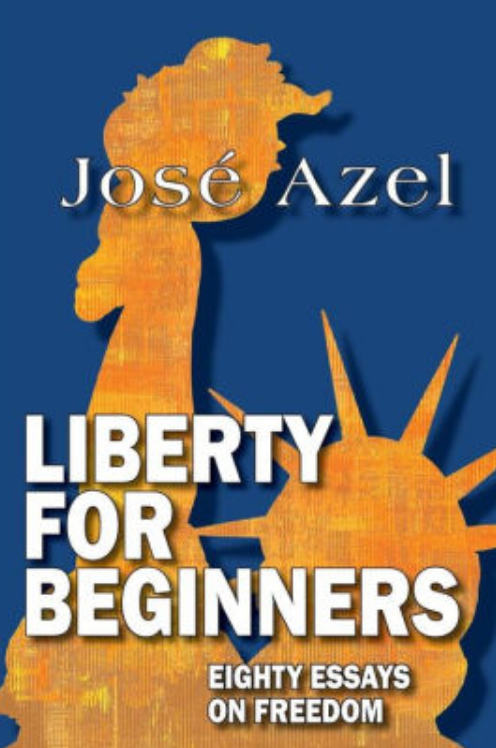
"Liberty for beginners is much more than what the title promises. It is eighty themes touched with the wisdom of a master, and the charm of an excellent communicator. Anyone that wishes to understand why countries do, or do not progress, will find in this book the best explanations.
If it was in my power, this work would be required reading for all college and university students, and I would recommend its reading to politicians, journalists, and policymakers. With this book Azel accomplishes what was achieved in France by Frédéric Bastiat, and in the United States by Henry Hazlitt: brings together common sense with intelligent observation, and academic substance. Stupendous"
Carlos Alberto Montaner
"Libertad para novatos es mucho más de lo que promete el título. Son ochenta temas tocados con la sabiduría de un maestro y la amenidad de un excelente comunicador. Cualquier adulto que desee saber por qué progresan o se estancan los pueblos aquí encontrará las mejores explicaciones.
Si estuviera en mis manos, esta obra sería lectura obligatoria de todos los estudiantes, tanto de bachillerato como universitarios, pero, además, se la recomendaría a todos los políticos y periodistas, a todos los policy makers. Azel logra con este libro lo que Frédéric Bastiat consiguiera en Francia y Henry Hazlitt en Estados Unidos: aunar el sentido común, la observación inteligente y la enjundia académica. Estupendo."
Carlos Alberto Montaner
In Reflections on FreedomJosé Azel brings together a collection of his columns published in prestigious newspapers.  Each article reveals his heartfelt and personal awareness of the importance of freedom in our lives.  They are his reflections after nearly sixty years of living and learning as a Cuban outside Cuba. In what has become his stylistic trademark, Professor Azel brilliantly introduces complex topics in brief journalistic articles.
En Reflexiones sobre la libertad José Azel reúne una colección de sus columnas publicadas en prestigiosos periódicos. Cada artículo revela su percepción sincera y personal de la importancia de la libertad en nuestras vidas. Son sus reflexiones después de casi sesenta años viviendo y aprendiendo como cubano fuera de Cuba.  En lo que ha resultado ser característica distintiva de sus artículos, el Profesor Azel introduce con brillantez complejos temas en  breves artículos de carácter periodístico.
Mañana in Cuba is a comprehensive analysis of contemporary Cuba with an incisive perspective of the Cuban frame of mind and its relevancy for Cuba's future.
Pedazos y Vacíos is a collection of poems written in by Dr. Azel in his youth. Poems are in Spanish.
To friend, follow or email author click on the icons below:
Click here to:
View this email in your browser

Access past issues
Access automated translations
Facilitate sharing
Print from your browser
Copyright © 2019 Azel & Associates, All rights reserved.
If you are receiving this email it is because we met you at some point on an adventure.

Our mailing address is:
Azel & Associates
440 Sawgrass Parkway, Suite 106
Sunrise, FL 33325