From The Summer Of Love


https://www.facebook.com/100012126186037/videos/957297318017799/

E.E.R.C.

A Paper Boat Named "Liberty"

the AZEL

PERSPECTIVE

Commentary on Cuba's Future, U.S. Foreign Policy & Individual Freedoms - Issue 3A
 
This Azel Perspective was first published in 2015.

A Paper Boat Named "Liberty"

Share
Tweet
Forward
Property rights, or the lack of them, are central to all contemporary political philosophies. Marxism rejects property rights outright, as explained by Karl Marx in the second chapter of his Communist Manifesto: “the theory of Communists may be summed up in a single phrase: Abolition of private property.

Even within the family of democratically grounded political beliefs — classical liberalism, social         democracy, and christian democracy — the topic of property rights receives dramatically different interpretations. Let’s try to examine briefly this extremely complex topic.

Classical liberalism is unambiguous as to property rights, as articulated by John Locke, the 17th-century British political philosopher and father of classical liberalism:

"Every Man has a Property in his own Person … The Labour of his Body, and the Work of his Hands, we may say, are properly his. Whatsoever then he removes out of the State that Nature hath provided, and left in it, he hath mixed his Labour with, and joyned to it something that is his own, and thereby makes it his Property."

For Locke, property rights are a necessary implication of self-ownership. For example, if I take a sheet of paper that I own and fold it carefully so as to make a paper boat, that paper boat is properly mine. I have joined my labor with my sheet of paper, making the crafted paper boat my property.

Unceremoniously, I christen my paper boat “Liberty” and launch it to the pool.
Social democrats see it differently. During the late 19th and early 20th centuries, social-democracy movements profoundly influenced by Marxism sought to replace private ownership with social ownership of the means of production.

In its current version, social democracy can be defined as a political ideology that advocates state-economic and social intervention (e.g., regulation of the economy, redistribution of income) within capitalism to foster social justice. Its end goal is to promote a peaceful evolutionary transition of society from capitalism to socialism using established political processes.

As social democrats see it, they can rightfully expropriate my paper boat in the name of social justice, because the boat is not rightfully my own. The sheet of paper that I used came from a tree that, in nature, is part of the common heritage of mankind, and therefore the byproduct is not properly mine. It belongs to us all.

Similarly, because I developed the labor and technology that I used — my paper-boat-making skills — while attending a public school financed by the community, social democrats argue that the paper boat, or a portion of it, belongs to the community.

On this topic, Christian democrats arrive at more or less the same conclusion, but from a different philosophical perspective. Christian democracy can trace its philosophical roots back to Thomas Aquinas, but emerged as a political movement at the end of the 19th century, influenced by Catholic social doctrine.

As Christian democrats see it, the paper boat is not mine alone. The sheet of paper I used came from a tree created by God and therefore belongs to us all. My paper-boat-making skills are a God-given gift, and God would want me to use his tree and the talents He gave me for the benefit of mankind.

While social and Christian democrats differ on many other dimensions, they agree on regulating market forces, social justice, and support for a welfare state. In Latin America, for example, while tending towards conservatism on social issues, Christian democrats ideologically join progressives on economic issues.

Both social and Christian democratic orthodoxies propose using the state’s coercive force to cut my paper boat so that, in the name of social justice, one part can be shared with the community. Although I am unpersuaded by their arguments that the boat is not really mine, I am given no choice.

I cut “Liberty” in half, but when I placed it back in the water, it promptly sank.

Like Issue 3A - A Paper Boat Named "Liberty" on Facebook
We welcome your feedback.
Abrazos,

Lily & José
(click on the name to email Lily or Jose)
This article was originally published in English in the PanAm Post on November 23, 2015 and in El Nuevo Herald on November 3, 2015.
José Azel, Ph.D.
José Azel left Cuba in 1961 as a 13 year-old political exile in what has been dubbed Operation Pedro Pan - the largest unaccompanied child refugee movement in the history of the Western Hemisphere.  

He is currently dedicated to the in-depth analyses of Cuba's economic, social and political state, with a keen interest in post-Castro-Cuba strategies as a Senior Scholar at the Institute for Cuban and Cuban-American Studies (ICCAS) at the University of Miami and has published extensively on Cuba related topics.

In 2012 and 2015, Dr. Azel testified in the U.S. Congress on U.S.-Cuba Policy, and U.S. National Security.  He is a frequent speaker and commentator on these and related topics on local, national and international media.  He holds undergraduate and masters degrees in business administration and a Ph.D. in International Affairs from the University of Miami. 

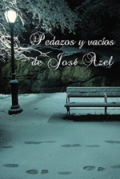
Dr. Azel is author of Mañana in Cuba: The Legacy of Castroism and Transitional Challenges for Cuba, published in March 2010 and of Pedazos y Vacios, a collection of poems he wrote as a young exile in the 1960's.

José along with his wife Lily are avid skiers and adventure travelers.  In recent years they have climbed Grand Teton in Wyoming, trekked Mt. Kilimanjaro in Tanzania and Machu Pichu in Peru.  They have also hiked in Tibet and in the Himalayas to Mt. Everest Base Camp.

They cycled St. James Way (
El Camino de Santiago de Compostela) and cycled alongside the Danube from Germany to Hungary. They have scuba dived in the Bay Islands off the Honduran coast. 

Their adventurers are normally dedicated to raise funds for causes that are dear to them. 
Watch Joe & Lily summit Kilimanjaro.

Books by Dr. José Azel
Mañana in Cuba is a comprehensive analysis of contemporary Cuba with an incisive perspective of the Cuban frame of mind and its relevancy for Cuba's future.
Buy now

 
Pedazos y Vacíos is a collection of poems written in by Dr. Azel in his youth. Poems are in Spanish.
Buy now
To friend, follow or forward email click on the icons below:
Copyright © 2015 Azel & Associates, All rights reserved.
If you are receiving this email it is because we met you at some point on an adventure.

Our mailing address is:
Azel & Associates
440 Sawgrass Parkway
Suite 106
Sunrise, FL 33325

Block Their Utilities


https://www.facebook.com/100012126186037/videos/956560868091444/

E.E.R.C.

De Blasio Gives Green Light To Terrorist


https://www.facebook.com/100012126186037/videos/955873194826878/

E.E.R.C.

Stop The Vandalism


https://www.facebook.com/100012126186037/videos/955076798239851/

E.E.R.C.

The Threat Of Marxist Terror


https://www.facebook.com/100012126186037/videos/954384058309125/

E.E.R.C.

Alert:


CONTACT:
Leandra Solano
media@cubadecide.org
305.209.5649
 
MEDIA ALERT


Alert: Cuban dissident on hunger strike at U.N.
human rights office, refusing medical attention
 
 
#DóndeEstáBachelet
 
GENEVA, June 24, 2020 — Cuban environmental activist and former political prisoner Dr. Ariel Ruiz Urquiola is on a hunger strike in front of the United Nations human rights office in Geneva, has not had food, drink or his medications in more than 48 hours, and is at grave risk, warn human rights activists.

The dissident scientist is seeking a hearing from the United Nations about crimes done to him and his sister, Omara Ruiz Urquiola, by the Cuban government. (Click here for an interview with his sister.)

“I just spoke to Ariel, and I am very concerned that he is refusing to allow any medical care or attention,” said Cuban pro-democracy activist Rosa Maria Paya, executive director of Fundacion para la Democracia Panamericana.

“This is the third day of the Cuban scientist’s hunger and thirst strike in front of the office of Michelle Bachelet, the United Nations High Commissioner for Human Rights. The regime of Raúl Castro and Miguel Diaz-Canel infected Ariel with the HIV virus in Cuba, and he only asks to be heard.”

“Michelle Bachelet is responsible for his life. The high commissioner must walk the steps that separate her from Ariel, outside the gates of the Wilson Palace, and save his life. Where is Bachelet?”

In June 2018, Amnesty International declared Dr. Ruiz Urquiola a prisoner of conscience. His cause has recently been supported by groups such as the International Society for Human Rights, among others.

When Dr. Ruiz Urquiola accused the Cuban government in his research projects of destroying the environment, he was harassed and persecuted. The authorities tried to withdraw his teaching license and to end his academic career.

‟When I was arrested, I was demonstrably still healthy, but I was infected with HIV in prison on purpose”, says Dr. Ruiz Urquiola, as reported by Spanish newswire EFE.

Cuba Running for U.N. Human Rights Council Seat

Hillel Neuer, executive director of the independent human rights group UN Watch in Geneva, met with the hunger-striking Cuban dissident today.

“He looked weak, and I’m deeply concerned for his health,” said Neuer. “I am urging Michelle Bachelet to grant him a hearing.”

“Ariel is rightly outraged that the UN ignores the Cuban regime’s massive human rights violations, and that Havana is about to be re-elected to the UN Human Rights Council in a few months.”
 
 
About Cuba Decide

Cuba Decide is a citizen initiative to change the political and economic system in Cuba provoking a peaceful transition process towards democracy.

THE STRATEGY
Generate the pressure necessary to force the regime to submit to the will of the people through coordinated non-violent action of the citizens and the international community.
Convert thousands of Cubans into agents of change through a platform that informs, involves, and mobilizes citizens on the Island.

THE TOOL
Cubans must be free to decide their future.
To make the change, Cuba Decide proposes that the will of Cubans be expressed and complied with through a binding plebiscite in Cuba ―a direct vote of the people― to answer the following question:

Are you in agreement with the convening of free, fair and plural elections exercising freedom of expression and of the press, and organizing freely in political parties and social organizations with total plurality? Yes or No?
 
JOIN US
A tremendous mobilization effort is under way!
Learn more and join our movement at cubadecide.org.
Be part of our conversations on Facebook.com/CubaDecide and on Twitter and Instagram by following the user @CubaDecide and using the #CubaDecide tag.
 
FDP is a 501(c)(3) nonprofit organization which promotes the Cuba Decide platform alongside thousands of Cubans.

The Century

06/25/2020

 
A publication of the Cuban Studies Institute

Cuban Institutions and Groups” is a new series of weekly publications highlighting the principal political, economic, social and cultural organizations that developed during Cuba’s colonial and national period.
 

CUBAN INSTITUTIONS AND GROUPS
 
El Siglo
 
A political, economic, and commercial newspaper founded in Havana by José Quintín Suzarte and Francisco de Frias Jacott in 1861 to campaign for Cuban home rule.  Contributors included José Morales Lemus.  In 1863 the paper was taken over by reformist Creoles who sought a reduction in the powers of the captain general.  They advocated greater individual freedom, equal political rights for Cubans and Spaniards, and representation in the Cortes.  They offered the editorship to José Antonio Saco, but he declined it.  An April 7, 1865 editorial stated that the paper would never support abolition of slavery without compensation to the slave owners.  El Siglo, which sought to form public opinion, ceased publication in 1868 when the abolition of the Junta de Información showed Spain’s lack of interest in reform.
 
Visit Website
This is a publication of the Cuban Studies Institute. 

Our mailing address is:
1500 South Dixie Highway, Bank of America Bldg., 2nd Floor
Coral Gables, FL  33146
Tel: 786-803-8007