Wednesday, September 30, 2020
Free Cuba Now!

To promote a peaceful transition to a Cuba that respects human rights
and political and economic freedoms


Communist dictatorships in China and Cuba celebrate 60 years of diplomatic relations
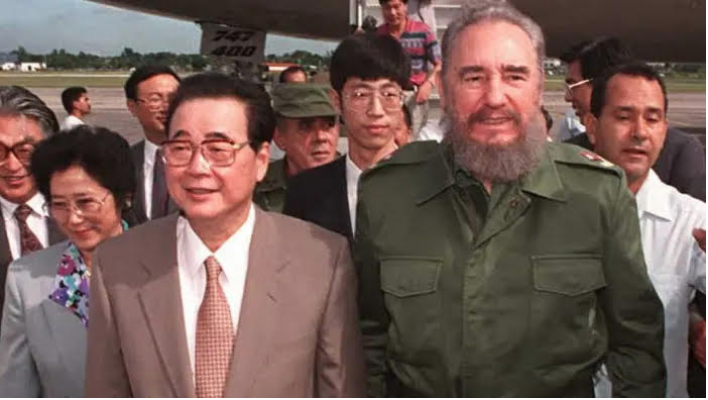
Chinese Premier Li Peng and Fidel Castro in Havana in 1995
President Xi, who is also general secretary of the Communist Party of China Central Committee, exchanged congratulatory messages with Raul Castro Ruz, first secretary of the Communist Party of Cuba Central Committee, and Cuban President Miguel Diaz-Canel to celebrate the 60th anniversary of diplomatic relations between the two communist dictatorships.
On September 28, 1960 the Cuban government diplomatically recognized the Peoples Republic of China. Ernesto "Che" Guevara with a Cuban delegation visited Mainland China and met with Mao Zedong, Zhou Enlai, and other high ranking Chinese officials in November 1960 to discuss conditions in Cuba and in Latin America, and the prospects for communist revolution in the Western Hemisphere.
This was at a time that Havana still had normal diplomatic relations with the United States. Diplomatic relations between Cuba and the United States were severed on January 3, 1961.

Ernesto 'Che' Guevara and Chairman
Mao Zedong dining in 1960
Between 1960 and 1964 the two regimes collaborated closely together.
Relations between China and Cuba cooled in 1964 when the Castro regime sided with the Soviet Union in the Sino-Soviet split, but warmed again in 1989 following the Tiananmen Massacre. The Castro regime was one of the few governments to support the massacre, and the Castro regime had distanced itself from the Soviet Union viewing Perestroika and Glasnost as existential threats to their rule.
Cuba's relationship with the Soviet Union provided Havana with expertise in biological warfare and biotech that had been denied to the Chinese due to the above mentioned split. The Castro regime beginning in the late 1980s began offering that knowledge to their counterparts in Beijing and signed a formal agreement to produce monoclonal antibodies in 2002.
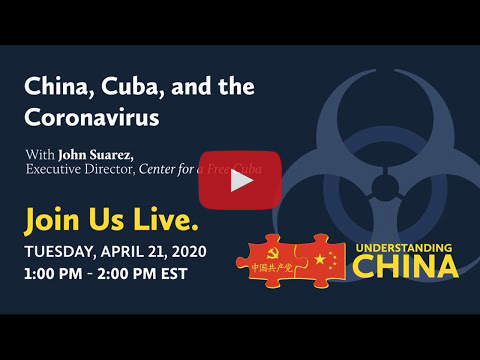
The two regimes have been working closely together during the COVID-19 pandemic that originated in Wuhan, China in December 2019. Above is a video presentation given in April 2020 on this relationship and its negative international impact.
At the United Nations Human Rights Council on July 1, 2020 the Castro regime took the lead in backing the new security law in Hong Kong that effectively ends autonomy there. Below is the official statement by one of the many propaganda agencies of the Chinese Communist Party reproduced today in The Sun.
Tuesday, September 29, 2020
Maria Elvira For Congress
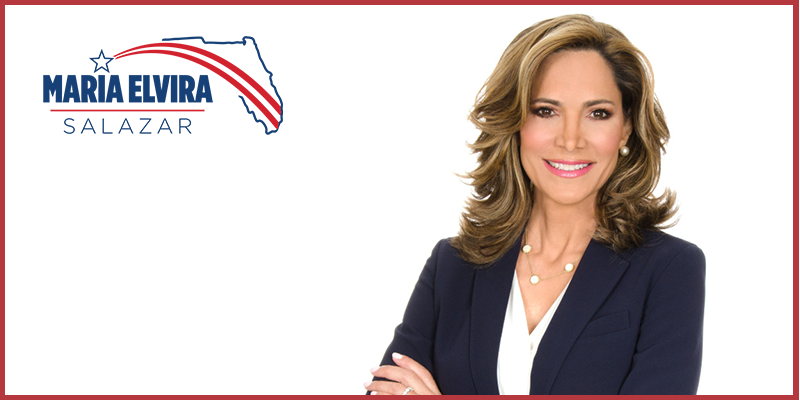 It’s MES.
We’re entering the LAST MONTH before the election, which means we are running out of time to outraise, outreach, and outwork Donna Shalala. Unfortunately, Shady Shalala is backed by Nancy Pelosi’s dark money groups, which means we have to do a lot of work to keep the lead.
 🚨Final End of Quarter Deadline🚨 5X MATCHING ACTIVATED *A money bomb is a way to give an additional donation of the same amount automatically on a future date. This means you will be charged for a donation equal to the one you make today on September 30th to start our Final Quarter with the budget needed to fight Donna Shalala and the Democrat Machine* Eduardo, with your help, we will be one step closer to reaching my FINAL END OF QUARTER goal and our mission of defeating Donna Shalala and Socialism in Miami. I started this campaign with one goal in mind; because I love the city of Miami. I want to defend the ideals of liberty and the American Dream that so many of us hold dear.
Maria Elvira Salazar We know that Americans all across the country are going through a challenging time and many are struggling to make ends meet as a result of the coronavirus outbreak. Please only contribute if you are able to, and if you would like to stop receiving fundraising emails for the time being, please follow this link. Federal election law requires political committees to use best efforts to report the name, mailing address, occupation, and name of employer of individuals whose contributions exceed $200 during an election cycle. An individual may not contribute more than a total of $2,800 (maximum for Primary Election) per election to the committee. Federal law prohibits contributions to the committee from the general treasury funds of a corporation, labor organizations or national banks (including corporate or other business entity credit cards), from any person contributing another’s funds, from a Federal government contractor, or from a foreign national who lacks permanent resident status.I'm a new Text block ready for your content.
| ||||||||||||||||||||||||
Labor Conditions In Cuba
| |||||||||
| |||||||||
|

Monday, September 28, 2020
Sunday, September 27, 2020
Maria Elvira For Congress
Are you seeing the unrest in America right now?
☭ Arsonists are looting and burning small businesses! ☭ ☭ Rioters are harassing innocent Americans and attacking Police! ☭
The people of Miami understand better than anyone the DANGERS of the radical ideology trying to take over America. Our communities and families fled from the very same Socialist ideologies. We can’t allow them to bring Socialism to Miami >>
🇺🇸 We will stand with our Women and Men in Blue! 🇺🇸 🇺🇸 We will defeat Socialism and Keep Miami Free! 🇺🇸
 🚨Final End of Quarter Deadline🚨 5X MATCHING ACTIVATED *A money bomb is a way to give an additional donation of the same amount automatically on a future date. This means you will be charged for a donation equal to the one you make today on September 30th to start our Final Quarter with the budget needed to fight Donna Shalala and the Democrat Machine* Eduardo, with your help, we will defeat this Socialist movement in our country, kick Shady Shalala out of office, and Miami will continue to be the beacon of freedom to the rest of the country!
Maria Elvira Salazar We know that Americans all across the country are going through a challenging time and many are struggling to make ends meet as a result of the coronavirus outbreak. Please only contribute if you are able to, and if you would like to stop receiving fundraising emails for the time being, please follow this link. Federal election law requires political committees to use best efforts to report the name, mailing address, occupation, and name of employer of individuals whose contributions exceed $200 during an election cycle. An individual may not contribute more than a total of $2,800 (maximum for Primary Election) per election to the committee. Federal law prohibits contributions to the committee from the general treasury funds of a corporation, labor organizations or national banks (including corporate or other business entity credit cards), from any person contributing another’s funds, from a Federal government contractor, or from a foreign national who lacks permanent resident status.I'm a new Text block ready for your content.
| |||||||||||||||||||||||||||||