Post-Communism is not Pre-Democracy

the AZEL

PERSPECTIVE

Commentary on Cuba's Future, U.S. Foreign Policy & Individual Freedoms - Issue 52A
 
This Azel Perspective was first published in 2016.

Post-Communism is not Pre-Democracy

Share
Tweet
Forward
With a discredited ideology and an elderly historic leadership, the Cuban revolution may soon enter a post-totalitarian stage. Some point to this, and to the new U.S.-Cuba policy, and to the minimalist changes introduced by General Raul Castro to argue that Cuba has entered some sort of pre-democracy track.
Yes, as Alexis de Tocqueville noted in The Old Regime and the Revolution (1856): “…experience teaches that the most critical moment for bad governments is the one which witnesses their first step toward reform.” Raul Castro knows this as well, and post-communism will not be pre-democracy.

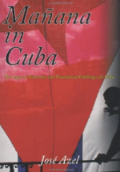
Tocqueville’s book analyzes French society before the French Revolution (1789-1799). In it he develops a theory of continuity arguing that, even though the French tried to dislodge themselves from the past and from the autocratic regime, they eventually reverted to a powerful central government.  I have voiced similar concerns in my book Mañana in Cuba and other writings.

Even when the participants are truly committed to democratic governance, curbing the tendencies towards powerful central governments is a demanding undertaking; more so in Cuba, with a tradition of authoritarianism, and no governing elite with an ingrained democratic culture.

In the United States, we recorded the same tensions at the birth of the new nation. These impulses are eloquently articulated and demonstrated by the friendship, destroyed by political rivalry, and back to friendship, of two of the most notable Founding Fathers: John Adams and Thomas Jefferson.

During the Second Continental Congress in 1776, it was the eloquent John Adams who defended Thomas Jefferson’s Declaration of Independence. Both were architects of that document that gave birth to the new nation.   Adams was the better speaker and Jefferson the better writer. As historians tell it, that was probably the last time that they agreed on anything political.

The irascible and ill-tempered Adams was a staunch Federalist and believer in a strong centralized government. The erudite, gentile Jefferson believed that central governments should be strictly limited in their powers. Adams and Jefferson embodied opposite political impulses of their revolutionary generation.

Jefferson, saw their struggle as a clean break from the past, the rejection of old political disciplines, and was hostile to extensive mechanism of governmental authority. He regarded the past as a “dead hand” of ingrained privileges and obstacles that must be discarded to allow individual freedom and energies to flow. He saw the economic and political wellbeing of the new nation as inversely proportional to the power of the central government.

Adams linked the success of the American Revolution to the traditions established in the colonial assemblies. Their correspondence created what political scientists consider the most intellectually extraordinary exchanges between statesmen in all of American history. It became an argument without end between Jefferson, the elegant Virginian, and Adams, the combative New Englander.

But, independently of their disagreements, Adams and Jefferson agreed on the fundamental liberal principle that sovereignty resides in the individual and not in some undemocratically appointed authority. They believed in the capitalistic principle that economic productivity hinges on free markets, and not on a state controlled economy. They shared the principle that all citizens are equal before the law, and the conviction that the individual and not the state is the central moral unit in society.

Their correspondence aired the contradictions that had been contained during the struggle for liberty.  Adams, who reached out to Jefferson after decades of outright enmity, put it this way, “You and I ought not to die before we have explained ourselves to each other.”

As fate would have it, Adams and Jefferson died within hours of each other on July 4, 1826, the 50thanniversary of the day they signed the Declaration of Independence.

Fast forward to some time in the future when totalitarianism comes to an end in Cuba and the impulse to anchor the future in the immediate past confronts the desire for a fresh new start. Unfortunately, statesmanship of the Adams-Jefferson quality will not be in place, or even agreement on basic democratic values. Yet, the essence of the Adams-Jefferson conflict will surface.

For Cuba, post-communism is unlikely to yield a pre-democratic milieu in which a new nation-state can be founded on liberal democratic principles.

Please let us know if you Like Issue 52A - Post-Communism is not Pre-Democracy on Facebook this article.
This article was originally published in English in the PanAm Post and in Spanish in El Nuevo Herald.
 
José Azel, Ph.D.
José Azel left Cuba in 1961 as a 13 year-old political exile in what has been dubbed Operation Pedro Pan - the largest unaccompanied child refugee movement in the history of the Western Hemisphere.  

He is currently dedicated to the in-depth analyses of Cuba's economic, social and political state, with a keen interest in post-Castro-Cuba strategies as a Senior Scholar at the Institute for Cuban and Cuban-American Studies (ICCAS) at the University of Miami and has published extensively on Cuba related topics.

In 2012 and 2015, Dr. Azel testified in the U.S. Congress on U.S.-Cuba Policy, and U.S. National Security.  He is a frequent speaker and commentator on these and related topics on local, national and international media.  He holds undergraduate and masters degrees in business administration and a Ph.D. in International Affairs from the University of Miami. 

Dr. Azel is author of Mañana in Cuba: The Legacy of Castroism and Transitional Challenges for Cuba, published in March 2010 and of Pedazos y Vacios, a collection of poems he wrote as a young exile in the 1960's.

José along with his wife Lily are avid skiers and adventure travelers.  In recent years they have climbed Grand Teton in Wyoming, trekked Mt. Kilimanjaro in Tanzania and Machu Pichu in Peru.  They have also hiked in Tibet and in the Himalayas to Mt. Everest Base Camp.

They cycled St. James Way (
El Camino de Santiago de Compostela) and cycled alongside the Danube from Germany to Hungary. They have scuba dived in the Bay Islands off the Honduran coast. 

Their adventurers are normally dedicated to raise funds for causes that are dear to them. 
Watch Joe & Lily summit Kilimanjaro.

Books by Dr. José Azel
Mañana in Cuba is a comprehensive analysis of contemporary Cuba with an incisive perspective of the Cuban frame of mind and its relevancy for Cuba's future.
Buy now

 
Pedazos y Vacíos is a collection of poems written in by Dr. Azel in his youth. Poems are in Spanish.
Buy now
To friend, follow or email author click on the icons below:
Copyright © 2015 Azel & Associates, All rights reserved.
If you are receiving this email it is because we met you at some point on an adventure.

Our mailing address is:
Azel & Associates
440 Sawgrass Parkway, Suite 106
Sunrise, FL 33325

Free Cuba Now!


To promote a peaceful transition to a Cuba that respects human rights
and political and economic freedoms


Why Cuban baseball players defect. What happens to Cubans who stay behind and try to live their lives with dignity. Holding the Castro regime and their enablers accountable


In the year 2000 PBS broadcast the documentary "Stealing Home: The case of contemporary baseball" . It was produced and directed by by Robert Anderson Clift and Salomé Aguilera Skvirsky and attempted to give the Cuban government the benefit of the doubt in the debate over defectors. The Economist in the June 8, 2018 article "Why athletes vanish:  Sportsmen frequently use international competitions as opportunities to leave their home countries for good" reported that " athletes have long used competitions as an opportunity to escape war, poverty or repressive dictatorships." In the same article they pointed out that "countries including Cuba and North Korea have been known to keep their athletes under surveillance to avoid losing entire teams." When athletes are spied on by their governments to prevent them escaping then one should understand that they are living under a dictatorship, and they are not free. Cuba in 2021 is not a free country and that is why "César Prieto, a 22-year-old infielder, [defected from] the Cuban National Baseball Team while it was in Florida, participating in an Olympic qualifying tournament", according to USA Today.

César Prieto walking off the field.

The question too often left unasked is "what happens to those Cubans who stay behind and try to live as free persons?"

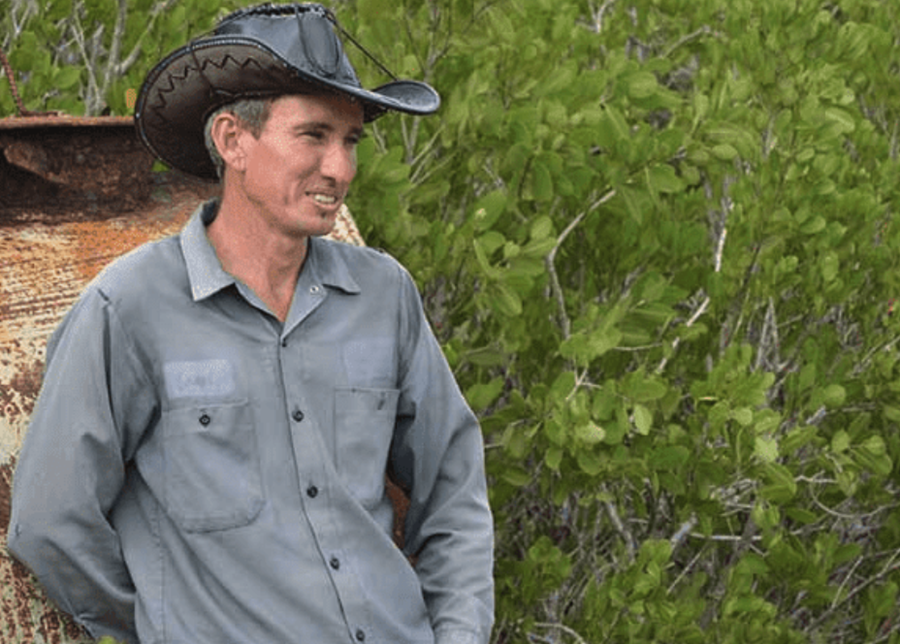
The human rights NGO Race and Equality reports that "Yandier Garcia Labrada was detained on October 6, 2020, after protesting against problems with the distribution of food in Manatí, Las Tunas. After being detained, he was held incommunicado for approximately a month, during which time he suffered beatings at the hands of security forces which left him with an immobilized arm. He has still not received any medical attention, despite this injury and his severe asthma." Yandier Garcia Labrada, who is a member of the Christian Liberation Movement, a nonviolent dissident movement, continues to be jailed  in  “El Típico” prison for nearly eight months without any charges presented against him.

Yandier Garcia Labrada

Professor Lillian Guerra, a historian at the University of Florida who specializes in Cuban and Caribbean history,  in an OpEd published in The New York Times titled "The Return of Cuba’s Security State" [ The Times chooses the title to run with, and for the record the Security State never left after the Castro brothers imposed it at gunpoint in 1959]  wrote:

"A  Castro is no longer running Cuba, yet we are witnessing a return to Soviet-style tactics to control ideas and silence public criticism. Cuban officials are using the regime’s old playbook — arrests and intimidation — to crush oppositional voices. Between the late 1960s and the 1980s, Cubans were subject to legal codes that criminalized attitudes, beliefs and behaviors the government considered a threat to national sovereignty. Embracing certain ideas, musical tastes and even fashion that Cuban officials found politically offensive were punishable offenses."

The repression did not end in the 1990s or 2000s but has continued to the present day.  On July 13, 1994 a tugboat with over seventy Cubans was sunk by regime officials killing 37 men, women, and children. On February 24, 1996 the Castro regime carried out a conspiracy that led to the shoot down of two civilian airplanes over international airspace killing four U.S. residents.  In Spring of 2003 the Castro regime organized a massive crackdown on the opposition in which 75 nonviolent activists were sentenced to prison sentences ranging up to 28 years in jail. During that same time three young black men were caught after they hijacked a boat that ran out of gas, and although no one was hurt, much less killed they were captured, tried and executed in under 10 days. Worse yet, Cuban artists were required to sign a letter supporting the measure.

Although agree with much of what Professor Guerra says in her OpEd and the plight of Luis Manuel Otero Alcántara’and the San Isidro Movement. I take issue with the idea that lifting sanctions will improve the situation. During the Obama Administration sanctions were loosened, and opposition leaders were killed, violence escalated against the opposition, and arbitrary detentions skyrocketed and over 24 U.S. diplomats suffered brain injuries in Havana beginning in 2016. The case of Communist China and the U.S. policy of engagement that did not normalize China, but led to the United States, and U.S. citizens engaging in abnormal behaviors to rationalize Chinese repression.

Let us not repeat the same mistake again in Cuba, but rather hold the Castro regime accountable for its human rights violations, and that includes property rights. This includes going after those who profit from stolen properties with the Cuban dictatorship. Title III of the Helms Burton law allows " Americans to pursue legal action against companies doing business in Cuba on property confiscated by the regime of Fidel Castro." The Wall Street Journal reported on March 26, 2021 that "LafargeHolcim Ltd. , a Swiss cement giant, has agreed in principle to settle a lawsuit brought by a group of 25 U.S. nationals who claimed the company used their Cuban property to conduct business, according to court documents." Economic sanctions and the defense of the rule of law are also nonviolent tools that bring accountability to the regime.  We should follow the wise counsel of the ancient Roman philosopher Marcus Tullius Cicero  who understood that "the greatest incitement to guilt is the hope of sinning with impunity." It is not coincidence that the greatest crimes of the Castro regime occurred when they were not being held accountable by international actors.

One final minor, but important point, a Castro is not formally running in Cuba, but the Castro clan led by Raul Castro continues to run Cuba today.


PROMINENT CUBANS

5/27/2021
 
A publication of the Cuban Studies Institute
“Prominent Cubans” is a new series of weekly publications highlighting the principal political, economic, social and cultural leaders during Cuba’s late colonial and national period.
 
We hope you enjoy this new publication. 
 
Following is the 21th  in this new series.
 
 
PROMINENT CUBANS
 
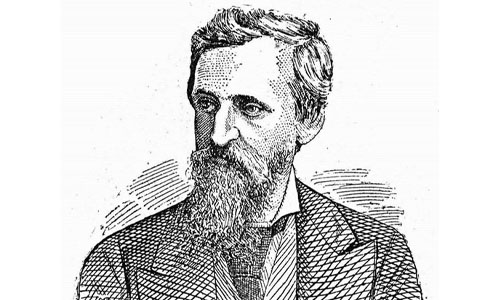
Salvador Cisneros Betancourt, Marqués de Santa Lucía (1828-1914)


Independent leader and statesman, born February 10 in Camagüey to the wealthy Agustín Cisneros Quesada, Marquis of Santa Lucia, and Ángela Gregoria Betancourt y Betancourt.  As a young man he was imprisoned in Spain for his support of the independence movement of Joaquín de Agüero.  He led the conspiracy in Camagüey, which culminated in the October 10, 1868 uprising in Yara and his proclamation, the Grito de Yara, heralded the Ten Years’ War.  He organized the November 4th uprising in Las Clavellinas and was a member of the 1869 Guáimaro Assembly that drew up the revolutionary action. He supported its article 24 calling for liberty and equality regardless of race and was speaker of the House of Representatives, (Cámara de Representantes de la República en Armas).  
 
In late 1873 he replaced Carlos Manuel de Céspedes y del Castillo as president of the rebel republic and tried unsuccessfully to promote an invasion of western Cuba.  Even after the Peace of Zanjón he kept his revolutionary ideals and faith in Cuban independence.  During the Independence War of 1895-1898 he was a member of the assembly that drew up the Jimaguayú Constitution and succeeded José Martí as the rebels’ president.  His inclination for legislative work was shown again by this participation in the convention that drew up the Constitution of 1901.  He was later elected senator for his province and died in Havana on February 28.
 
Read on Web
This is a publication of the Cuban Studies Institute. 

Our mailing address is:
1500 South Dixie Highway, Bank of America Bldg., 2nd Floor
Coral Gables, FL  33146
Tel: 786-803-8007
Fax: 786-803-8068
Email: cubanstudies@cubanstudiesinstitute.com