CSI

View this email in your browser
A publication of the Cuban Studies Institute
 

September 30, 2022


Dear friend:
 
The Cuban experience in America and other countries has proven disappointing and remarkable; disappointing because a homeland was lost and attempts to retrieve it turned into a nightmare, remarkable because refugees settled in their new countries and soon flourished, particularly in the United States.
 
Their experience over the last sixty years is captured in Cubans: An Epic Journey, a recently published collection of more than thirty informative essays by renowned scholars, historians, journalists, and media professionals.
 
This limited edition of Cubans: An Epic Journey, contains in its 860 pages, many fascinating and compelling stories of the journey of Cuban exiles. Edited by Sam Verdeja and Guillermo Martínez, the book is available, from the Cuban Studies Institute, for $38 (free shipping). Please order a copy today.

 
Saludos,


Jaime Suchlicki
Director


Order from: Cuban Studies Institute 

Name:__________________________________________________

Address:________________________________________________

City/State/Zip:____________________________________________

Phone:_________________________________________________

Email:__________________________________________________

Quantity: _______


Method of Payment

 [ ] Check enclosed (payable to Cuban Studies Institute
 [ ] Please place a one-time charge on the credit card listed for the amount of $______________

 [  ] MasterCard  [  ] Visa [  ] American Express [  ] Discover
 
Card Number:____________________________________________

CVV Number___________           Exp. _______

Name as it appears on card:

______________________________________________________


Signature:______________________________Date: ____________

 
By Phone: 786-803-8007
By Fax: 786-803-8068
By Mail:  Cuban Studies Institute, 1500 S. Dixie Highway, Suite 200, Bank of America Building, Coral Gables, FL 33146
 
THANK YOU!
 
This is a publication of the Cuban Studies Institute. 

Our mailing address is:
1500 South Dixie Highway, Bank of America Bldg., 2nd Floor
Coral Gables, FL  33146
Tel: 786-803-8007
Fax: 786-803-8068
Email: cubanstudies@cubanstudiesinstitute.com

Want to change how you receive these emails?
You can update your preferences or unsubscribe from this list.
 

Diaz Canel Is Booed While Passing Through The Streets Of Batanó

https://rumble.com/v1m5lik-diaz-canel-is-booed-while-passing-through-the-streets-of-batan.html

CSI

9/29/2022
 
A publication of the Cuban Studies Institute
“Bits of Cuban History” is a new series of weekly publications highlighting historical events and information from Cuba’s colonial and national periods.
 
We hope you enjoy this new publication.
 
Following is the 38th in this new series.
 
 
BITS OF CUBAN HISTORY

SPANISH CIVIL WAR
 
An attempted army pronunciamiento (coup) of July 14, 1936, was frustrated when Spain’s left-wing republican government issued arms to the general population. The result was a three-year war in which the nationalist insurgents owed their eventual victory to direct intervention by Italy, logistical support by Germany, and a British blockade. The republican cause was clamorously supported by progressives throughout Europe and the Americas, who saw it as the first stage in the coming struggle against fascism. The few friendly foreign governments included Mexico, Chile (at the end of the war), and the Soviet Union, which did its utmost to ensure that the Communists would dominate in the bitterly divided Republic.
 
Many of the Loyalist (Republican) refugees from the war were violence-prone and brought their activism and rivalries with them to Cuba. Some, such as Rolando Masferrer, (temporarily) supported the Communists, many others were strongly anti-Communist. Joining groups like the Movimiento Socialista RevolucionarioAcción Revolucionaria Guiterasand Unión Insurrecional Recvolucionaria in the 1040s, they contributed to the gangsterismo practiced by these organizations. Many were prominent in the “Caribbean Legion.”
 
This is a publication of the Cuban Studies Institute. 

Our mailing address is:
1500 South Dixie Highway, Bank of America Bldg., 2nd Floor
Coral Gables, FL  33146
Tel: 786-803-8007
Fax: 786-803-8068
Email: cubanstudies@cubanstudiesinstitute.com

Want to change how you receive these emails?
You can update your preferences or unsubscribe from this list.

With Hurricane Ian, Cuba Had Nothing, Now There Is Less And No Hope In Site

https://rumble.com/v1m1du2-with-hurricane-ian-cuba-had-nothing-now-there-is-less-and-no-hope-in-site.html

CSI

A publication of the Cuban Studies Institute
 

September 28, 2022

 
Dear friend:

The Cuban Studies Institute is pleased to offer a short video about the history of Cuba from the Spanish colonization to the current situation. It is an excellent introduction to the history, culture, and economy of the island and also highlights Cuba’s beautiful geography.

The 26 minutes video, “Short History of Cuba,” is narrated in English by the renowned actor and producer Andy Garcia and includes subtitles in Spanish. Carlos Alberto Montaner praised the work emphasizing that “explaining Cuban history in 26 minutes is a marvel; doing it well is a miracle. The last few minutes, devoted to the Communist era, are excellent.”  Marcos Antonio Ramos described the video as “a formidable introduction to Cuba.”

The Cuban Studies Institute is making this video available to our friends and followers for $20 per copy (free shipping).

This is a valuable history of Cuba that you, your family, and children will enjoy.


Saludos


Jaime Suchlicki
Director


Order from: 

Cuban Studies Institute Name:_________________________________

Address:________________________________________________

City/State/Zip:____________________________________________

Phone:_________________________________________________

Email:__________________________________________________

Quantity: _______


Method of Payment

 [ ] Check enclosed (payable to Cuban Studies Institute

 [ ] Please place a one-time charge on the credit card listed for the amount of $______________

 [  ] MasterCard  [  ] Visa [  ] American Express [  ] Discover

 
Card Number:__________________________

CVV Number___________ Exp. _______

Name as it appears on card: ______________________________________________

Signature: ______________________________________

Date: ____________

 
By Phone: 786-803-8007
By Fax: 786-803-8068
By Mail:  Cuban Studies Institute, 1500 S. Dixie Highway, Suite 200, Bank of America Building, Coral Gables, FL 33146
 
THANK YOU!                                           
 

This is a publication of the Cuban Studies Institute. 

Our mailing address is:
1500 South Dixie Highway, Bank of America Bldg., 2nd Floor
Coral Gables, FL  33146
Tel: 786-803-8007
Fax: 786-803-8068
Email: cubanstudies@cubanstudiesinstitute.com

Want to change how you receive these emails?
You can update your preferences or unsubscribe from this list.

Hurricane Ian And Communism Has Totally Destroyed Cuba

https://rumble.com/v1luwwq-hurricane-ian-and-communism-has-totally-destroyed-cuba.html

CSI

A publication of the Cuban Studies Institute
 

September 27, 2022

 
Dear friend:

The Cuban Studies Institute has received a donation from Ralp Galliano of several copies of the important book, “The Fourh Floor” written by Earl E.T. Smith, former U.S Ambassador to Cuba.  The books is now out of print and discusses the Castro Communist Revolution and its impact on Cuba and on U.S. policy toward Cuba.

First published in 1962, The Fourth Floor describes in painful detail just how and why the communists were able to gain control of the strategically located island only ninety miles from the United States mainland.  Smith’s explanation of events remains timely today as it clearly demonstrates the disastrous effects of an ill-advised and ineffective foreign policy development structure.  As Smith’s title suggests, a great deal of responsibility for the Cuban fiasco must be borne by the bureaucrats who occupied the “fourth floor” of the State Department building in Washington, D.C.  As President Eisenhower’s “man in Havana” from July 1957 to January 1959, Ambassador Smith witnessed firsthand the events that resulted in the fall of Fulgencio Batista and the advent of Castro.

CSI is making this book available to our friends and followers for $35 per copy (free shipping).  The Fourth Floor is being sold at Amazon for more than twice this amount.

This is a valuable story of Castro rise to power and of the failures of American foreign policy in the 1950s.  Please order before this limited number of books are sold out.  Thank you.

Saludos


Jaime Suchlicki
Director


Order from: 

Cuban Studies Institute Name:_________________________________

Address:________________________________________________

City/State/Zip:____________________________________________

Phone:_________________________________________________

Email:__________________________________________________

Quantity: _______


Method of Payment

 [ ] Check enclosed (payable to Cuban Studies Institute

 [ ] Please place a one-time charge on the credit card listed for the amount of $______________

 [  ] MasterCard  [  ] Visa [  ] American Express [  ] Discover

 
Card Number:__________________________

CVV Number___________ Exp. _______

Name as it appears on card: ______________________________________________

Signature: ______________________________________

Date: ____________

 
By Phone: 786-803-8007
By Fax: 786-803-8068
By Mail:  Cuban Studies Institute, 1500 S. Dixie Highway, Suite 200, Bank of America Building, Coral Gables, FL 33146
 
THANK YOU!                                           
 

This is a publication of the Cuban Studies Institute. 

Our mailing address is:
1500 South Dixie Highway, Bank of America Bldg., 2nd Floor
Coral Gables, FL  33146
Tel: 786-803-8007
Fax: 786-803-8068
Email: cubanstudies@cubanstudiesinstitute.com

Want to change how you receive these emails?
You can update your preferences or unsubscribe from this list.
 

Cuban With Broken Arm Wrapped With Coconut Leaf At Hospital, No Medication

https://rumble.com/v1lpv7z-cuban-with-broken-arm-wrapped-with-coconut-leaf-at-hospital-no-medication-f.html

To Be, or Not to Be Free


the AZEL

PERSPECTIVE

Commentary on Cuba's Future, U.S. Foreign Policy & Individual Freedoms - Issue 272B
 
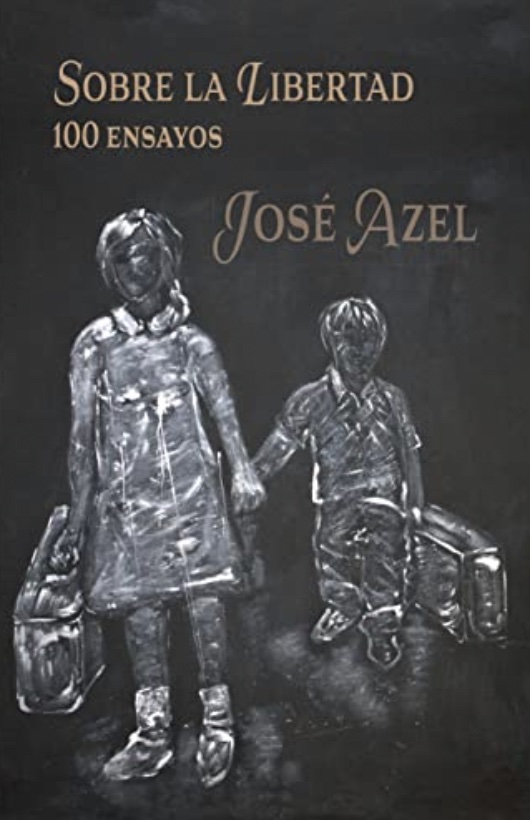
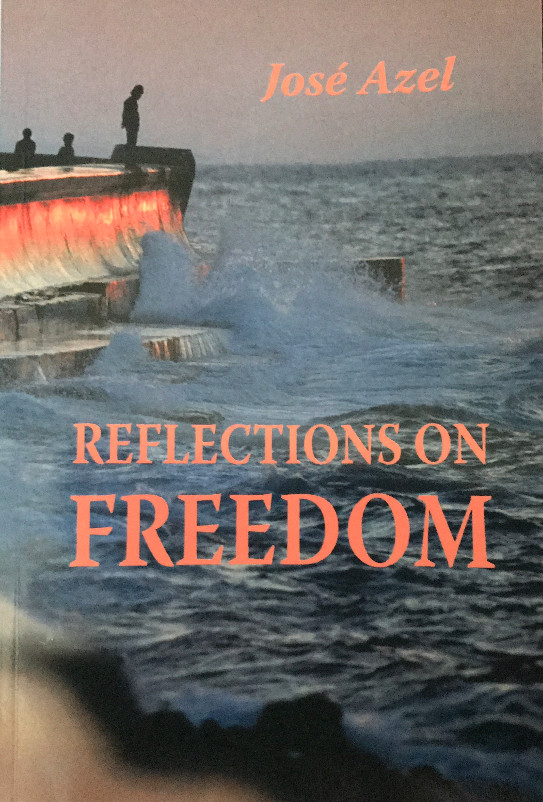
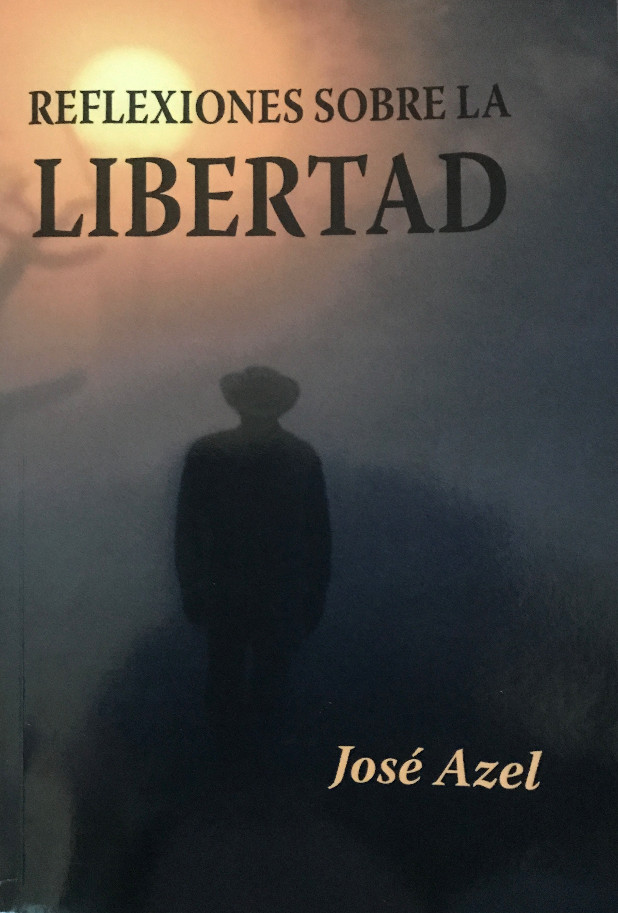
José Azel's latest books "On Freedom" and "Sobre La Libertad" are now available on Amazon. 
ShareShare
TweetTweet
ForwardForward

To Be, or Not to Be Free (Previously Published)

                                  In memory of Oswaldo Payá

We take it for granted that all peoples aspire to be free, but the idea of individual freedoms is not universally accepted.
Believers of totalitarian and authoritarian regimes across the world hold that a dictatorial approach to governing is moral, just, and necessary. Some offer that a developing nation needs a strong-man rule to effectively promote economic growth without the aggravations of democracy.  Others feel authoritarian rule is necessary to assure law and order. Others embrace monarchies, realms, or other hereditary forms of governments to protect the traditions and customs of their people. Others believe that their church and government are one and the same and that their religious beliefs are above a selfish desire for freedom.  Marxists sacrifice individual freedoms in the altar of collectivism.

If that is their well-informed choice, these true believers in single-party permanent rule, should be free to be unfree -preferably in another planet. But, this begs the question of how should a society decide on its form of government. The dictatorial answer is to hold on to power indefinitely as we see in totalitarian states like North Korea and Cuba. The democratic answer, of course, is by free, fair, competitive, multiparty, and frequent elections.

This is why I find the Cuba Decide Plebiscite project, spearheaded by Rosa Maria Payá Acevedo such a refreshing proposition after nearly six decades of Castro rule in Cuba. Rosa Maria is the youthful, highly articulate, daughter of slain Cuban democracy activist Oswaldo Payá, recipient of the European Parliament’s prestigious Sakharov Prize and five-time nominee for the Nobel Peace Prize. Rosa Maria, as president of the Latin American Youth Network for Democracy, is continuing her father’s work to foster democracy in that tragic Island.

The Cuba Decide Plebiscite initiative proposes to answer by a direct “Yes” or “No” vote of the Cuban people one basic, but transcendental question:

Do you agree with the convening of free, fair, and pluralistic elections, by exercising freedom of speech; and organizing freely in political parties and social organizations with full plurality?

It would be naive to expect that the Castro regime would agree to hold such a binding plebiscite. Yet, at a minimum, promoting the plebiscite provides a strategic tool to encourage a highly focused political debate and public dialogue both in Cuba and in international forums. It puts the spotlight on the fact that it is the people’s prerogative, and no one else’s, to decide their form of government.

Few would disagree with the plebiscites’ central postulate that Cubans must be free to decide their future. Even supporters of the Castro regime would find it ideologically difficult to object to presenting this simple question to the Cuban people. The only intellectually honest way to protest such a people empowering plebiscite is to argue that people should not have a say in their future and to argue that dictatorships are the preferable form of government. Not many international leaders are willing to publicly state that preference.

The Cuba Decide Plebiscite is not a political platform, but rather a tool to initiate change if the Cuban people decide that change is warranted by a “Yes” vote that offers the possibility of alternatives. A “No” vote would legitimize single-party permanent rule. In some ways, the plebiscite idea offers a Cuban leadership of Castro’s successors an elegant and accepted way to change course or, alternatively, to seek to legitimize their single-party rule. As events unfold in post-Castro Cuba, the youth-led Cuba Decide Plebiscite initiative may become a key component of a legitimate transition.

Freedom has consequences, not all of them useful, but it is immoral and unjust to deprive people of their freedom as dictators do. Our rational judgment is our basic means of living. If we cannot act in accordance with our free judgment, we cannot live fully as human beings. And we need freedom to act on our judgments. After decades of freedom-less lives under totalitarian rule, the Cuba Decide Plebiscite is a citizen-led initiative fundamentally asking the Cuban people a rational judgment question: Do you want to be free? “Yes” or “No.” Who can possibly object to such a question? The answer should enlighten us all.

Please let us know if you Like Issue 272B - To Be, or Not to Be Free on Facebook this article.
We welcome your feedback.
Abrazos,
 
Lily & José
 
(click on the name to email Lily or Jose)
José Azel, Ph.D.
José Azel left Cuba in 1961 as a 13 year-old political exile in what has been dubbed Operation Pedro Pan - the largest unaccompanied child refugee movement in the history of the Western Hemisphere.  

He is currently dedicated to the in-depth analyses of Cuba's economic, social and political state, with a keen interest in post-Castro-Cuba strategies. Dr. Azel was a Senior Scholar at the Institute for Cuban and Cuban-American Studies (ICCAS) at the University of Miami, Jose Azel has published extensively on Cuba related topics.

In 2012 and 2015, Dr. Azel testified in the U.S. Congress on U.S.-Cuba Policy, and U.S. National Security.  He is a frequent speaker and commentator on these and related topics on local, national and international media.  He holds undergraduate and masters degrees in business administration and a Ph.D. in International Affairs from the University of Miami.

José along with his wife Lily are avid skiers and adventure travelers.  In recent years they have climbed Grand Teton in Wyoming, trekked Mt. Kilimanjaro in Tanzania and Machu Pichu in Peru.  They have also hiked in Tibet and in the Himalayas to Mt. Everest Base Camp.

They cycled St. James Way (
El Camino de Santiago de Compostela) and cycled alongside the Danube from Germany to Hungary and throughout southern France.  They have scuba dived in the Bay Islands off the Honduran coast and in the Galapagos Islands.

Their adventurers are normally dedicated to raise funds for causes that are dear to them. 
Watch Joe & Lily summit Kilimanjaro.

Books by Dr. José Azel
José Azel’s writings are touched with the wisdom of a master, and the charm of an excellent communicator. Anyone who wishes to understand why countries do, or do not, progress will find in this book the best explanations. And, from these readings emerge numerous inferences: How and why do the good intentions of leftist collectivism lead countries to hell? Why is liberty not a sub product of prosperity, but rather one of its causes?

If it was in my power, this work would be required reading for all college and university students, and I would also recommend its reading to all politicians, journalists, and policymakers. With his writings Azel accomplishes what was achieved in France by Frédéric Bastiat, and in the United States by Henry Hazlitt: Azel brings together common sense with intelligent observation, and academic substance. Stupendous,

Carlos Alberto Montaner
                                                                   BUY NOW
Los escritos de José Azel están tocados por la sabiduría de un maestro y la amenidad de un excelente comunicador. Cualquiera que desee entender por qué los países progresan, o no, encontrará en este libro las mejores explicaciones. De estas lecturas surgen numerosas inferencias: ¿Cómo y por qué las buenas intenciones del colectivismo de izquierda llevan a los países al infierno? ¿Por qué la libertad no es un subproducto de la prosperidad, sino una de sus causas?

Si estuviera en mis manos, esta obra sería de obligada lectura de todos los estudiantes universitarios, pero además, le recomendaría su lectura a todos los políticos, periodistas y policy makers. Con sus escritos Azel logra lo que Frédéric Bastiat consiguiera en Francia y Henry Hazlitt en Estados Unidos: aunar el sentido común, la observación inteligente y la enjundia académica. Estupendo.

Carlos Alberto Montaner
                                                           Compre Aqui
"Liberty for beginners is much more than what the title promises. It is eighty themes touched with the wisdom of a master, and the charm of an excellent communicator. Anyone that wishes to understand why countries do, or do not progress, will find in this book the best explanations. Stupendous"

Carlos Alberto Montaner

"Libertad para novatos es mucho más de lo que promete el título. Son ochenta temas tocados con la sabiduría de un maestro y la amenidad de un excelente comunicador. Cualquier adulto que desee saber por qué progresan o se estancan los pueblos aquí encontrará las mejores explicaciones. Estupendo."

Carlos Alberto Montaner

Compre Aqui

In Reflections on FreedomJosé Azel brings together a collection of his columns published in prestigious newspapers.  Each article reveals his heartfelt and personal awareness of the importance of freedom in our lives.  They are his reflections after nearly sixty years of living and learning as a Cuban outside Cuba. In what has become his stylistic trademark, Professor Azel brilliantly introduces complex topics in brief journalistic articles.
En Reflexiones sobre la libertad José Azel reúne una colección de sus columnas publicadas en prestigiosos periódicos. Cada artículo revela su percepción sincera y personal de la importancia de la libertad en nuestras vidas. Son sus reflexiones después de casi sesenta años viviendo y aprendiendo como cubano fuera de Cuba.  En lo que ha resultado ser característica distintiva de sus artículos, el Profesor Azel introduce con brillantez complejos temas en  breves artículos de carácter periodístico.
Mañana in Cuba is a comprehensive analysis of contemporary Cuba with an incisive perspective of the Cuban frame of mind and its relevancy for Cuba's future.
Pedazos y Vacíos is a collection of poems written in by Dr. Azel in his youth. Poems are in Spanish.
To friend, follow or email author click on the icons below:
Facebook
Twitter
Email
Click here to:
View this email in your browser

Access past issues
Access automated translations
Facilitate sharing
Print from your browser
Copyright © 2022 Azel & Associates, All rights reserved.
If you are receiving this email it is because we met you at some point on an adventure.

Our mailing address is:
Azel & Associates
440 Sawgrass Parkway, Suite 106
Sunrise, FL 33325

Want to change how you receive these emails?
You can update your preferences or unsubscribe from this list

 
Facebook
Twitter
Link
Website
Copyright © 2022 Azel & Associates, All rights reserved. 
If you are receiving this email, it is because we met you at some point on an adventure. 

Our mailing address is: 
Azel & Associates
440 Sawgrass Parkway Ste 106
SunriseFL 33325

Add us to your address book


Want to change how you receive these emails?
You can update your preferences or unsubscribe from this list

Email Marketing Powered by Mailchimp