Free Cuba Now!


To promote a peaceful transition to a Cuba that respects human rights
and political and economic freedoms


 

OTD in 1997, Cuban soldier gunned down a Danish student in Havana. Amnesty says hundreds of Cubans jailed for exercising their rights. Swedish NGO urges further int'l pressure on Cuba.
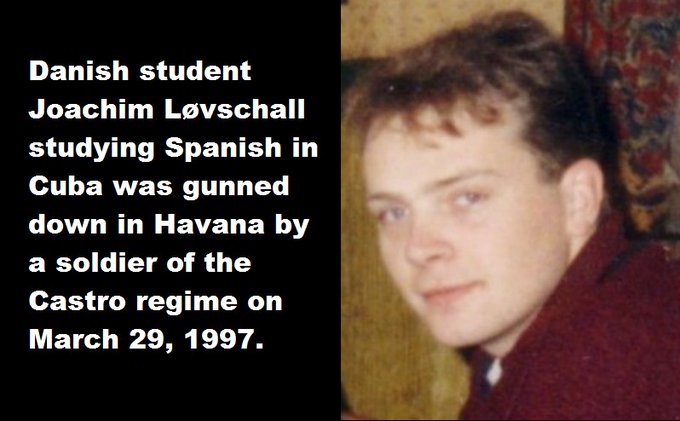
In the spring of 1997, Joachim Løvschall was in Havana studying Spanish. On March 29, 1997, in Havana, Cuba, he was shot and killed by a Castro regime soldier brandishing an AK-47. That was twenty-six years ago today.

Joachim posed no threat, he was unarmed. Joachim's family  was never informed of the soldier's identity. No one was held accountable for the 26 year old man's death. Joachim's family is not satisfied with the official explanation.

Father of Joachim Løvschall, Christian Løvschall, spoke about his son's initial disappearance and the family’s efforts to find out where was Joachim on June 12, 2007, during a parallel forum at the United Nations Human Rights Council:

"Although the killing took place on the 29th of March, we only came to know about it on the 6th of April - i.e. after 8 days were we had the feeling that the Cuban authorities were unwilling to inform anything about the incident. Only because of good relations with Spanish speaking friends in other Latin American countries did we succeed in getting into contact with the family with whom Joachim stayed and the repeated message from their side was that they could reveal nothing, but that the situation had turned out very bad and that we had to come to Cuba as soon as possible. At the same time all contacts to the responsible authorities turned out negatively... Only after continued pressure from our side on the Cuban embassy in Copenhagen, things suddenly changed and the sad information was given to us by our local police on the evening of the 6th of April. We are, however, 100% convinced that had we not made use of our own contact and had we not continued our pressure on the embassy in Copenhagen, we might have faced a situation where Joachim would have been declared a missing person, a way out the Cuban authorities have been accused of applying in similar cases."

 Christian Løvschall outlined what he had learned concerning his son's untimely death:

We do feel we were (and still are) left with no answers except to maybe one of the following questions: Where, When, Who, Why Starting out with the where we were told that Joachim was killed by the soldiers outside the Ministry of Interior.

Where

What we do not understand is why no fence or signs did inform that this is a restricted area? I have been on the spot myself, and the place appears exactly like a normal residential area. So you may question whether this in fact was the place of the killing? Contrary to this the authorities keep maintaining that the area was properly sealed off, and the relevant sign posts were in place.

When

As to when Joachim was killed we only have the information received from the police because of the delay informing one might believe that this is another forgery made up to cover the truth.

Who

The who was in our opinion has never been answered by the Cuban authorities. We understand that a private soldier on duty was made responsible for the killing, and also it has been rumored that his officer in charge has been kept responsible. This is of course the easy way out, but why can't we get to know the whole and true story?   

Why 

Why did the soldiers have to fire two shots, one to his body and one to his head, to murder him? Was Joachim violent and did he, an unarmed individual, attack the armed soldiers? Or is it simply that the instruction to Cuban soldiers are: first you shoot and then you ask? But again: Who can explain why two shots were needed?

26 years later and the human rights situation has not improved.
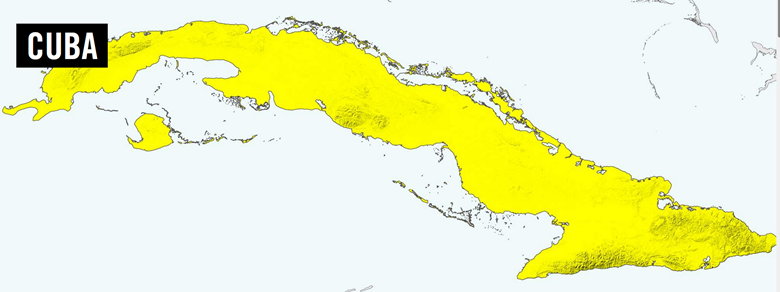


On March 27, 2023 Amnesty International released their annual report, and the chapter on Cuba is an indictment of the Cuban dictatorship. The introductory summary highlighted the Castro regime’s failure on all fronts: both civil and political rights, and social and economic rights.

Food shortages and electricity outages were frequent throughout the year. Hundreds of people remained in prison following a crackdown on protesters in July 2021. In the wake of Hurricane Ian, authorities deployed military cadets to repress widespread protests over electricity outages and interrupted the internet. Three prisoners of conscience remained in prison, representing only a tiny fraction of the total number of people feared detained for the peaceful exercise of their human rights.
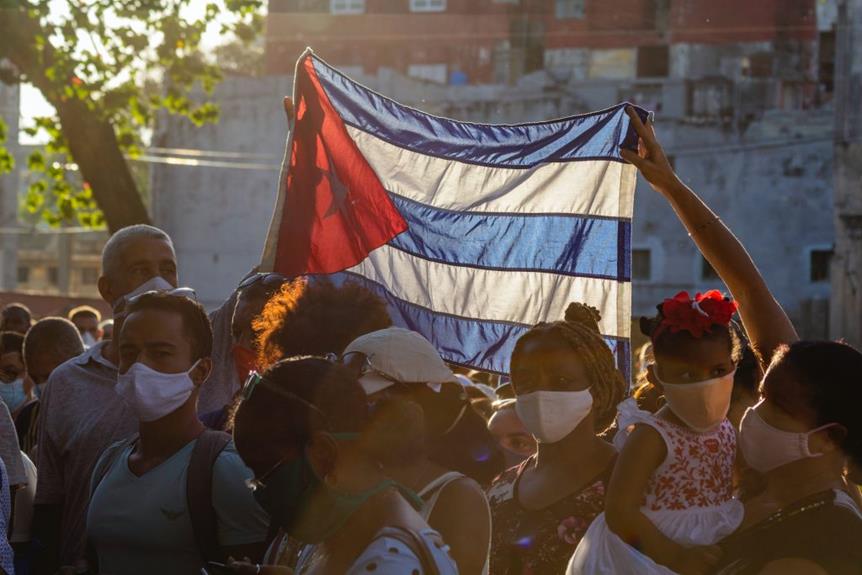
 

Civil Rights Defenders, a Swedish NGO, on March 24, 2023 released a statement on the upcoming vote for the National Assembly titled “Cubans are allowed to vote but not to choose” in which Erik Jennische, head of the Latin America department at Civil Rights Defenders called for international solidarity for Cuba’s pro-democracy movement and that additional pressure be placed on the Cuban dictatorship.

“The important thing now is that human rights defenders working for democracy in the country receive support from the international community. The international community, in turn, also needs to put pressure on Cuba to hold free and democratic elections.”


Kim Jong-un, MAD or Chekhov’s Gun? (Previously published)


the AZEL

PERSPECTIVE

Commentary on Cuba's Future, U.S. Foreign Policy & Individual Freedoms - Issue 297B
 
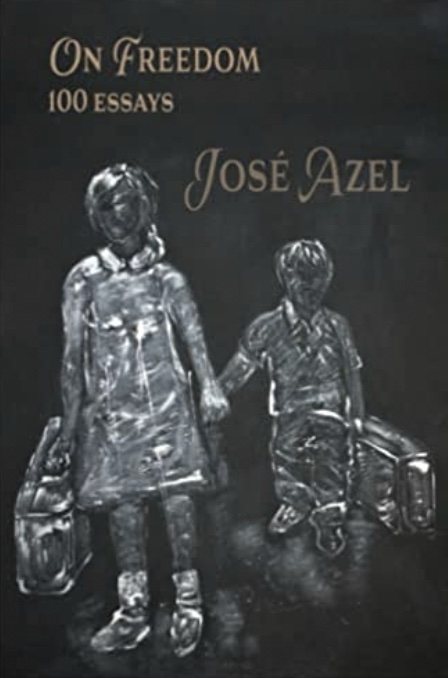
José Azel's latest books "On Freedom" and "Sobre La Libertad" are now available on Amazon. 

Kim Jong-un, MAD or Chekhov’s Gun? (Previously published)

ShareShare
TweetTweet
ForwardForward
Is Kim Jong-un, MAD or flaunting Chekhov’s Gun?  There is a bit of word play in my title.  Kim Jong-un may very well be mad, but the capitalized MAD refers to the doctrine of military strategy and national security policy of Mutual Assured Destruction (MAD).
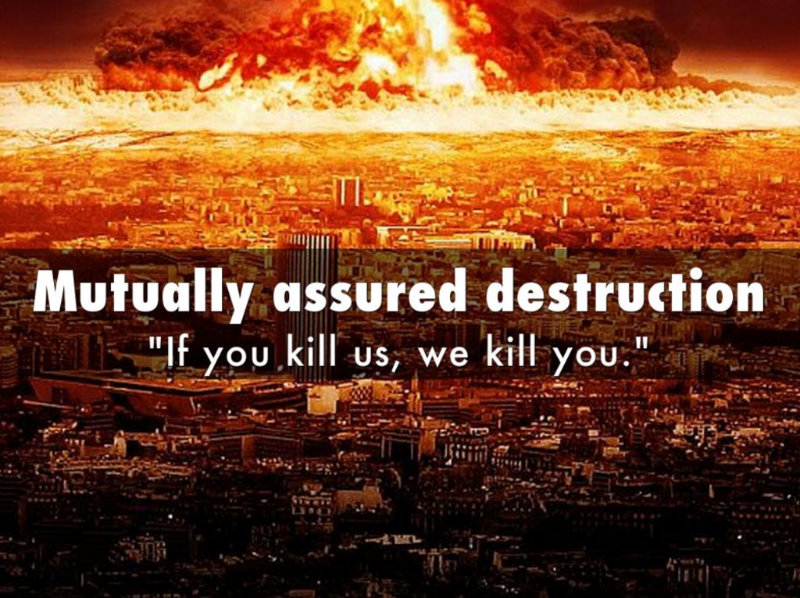
MAD, is based on the theory of deterrence, in which a full-scale use of nuclear weapons would cause the complete annihilation of both the attacker and the defender. Thus, the threat of using nuclear weapons against an enemy inhibits the enemy from using those same weapons. In this scenario neither side has any incentive to initiate a conflict or to disarm.  Under MAD doctrine, each side has enough nuclear weapons to retaliate causing the complete annihilation of the attacker so that neither side will dare to launch a first strike. The application of MAD doctrine during the Cold War (1940s to 1991) is credited with preventing a full-scale conflict between the United States and the Soviet Union.

However, MAD is based on several assumptions. 1. A first strike must not be capable of preventing a retaliatory response strike. A decapitation strike must not be possible; mutual destruction must be assured. 2. The attacker must be identifiable. 3.  Parties must not have the ability to defend with extensive fallout shelters or anti-missile technologies. 4.  And, most relevant here, MAD assumes that leaders will be perfectly rational and that they care about the survival of their citizens. MAD does not work against an extremist or irrational leader that may welcome Armageddon. Such was the case during the Cuban Missile crisis when Fidel Castro urged the Soviet leader Nikita Khrushchev to launch a preventive nuclear attack on the United States claiming that Cubans were willing to be the first victims in the name of socialism.

Currently, although North Korea possesses some nuclear bombs (analysts’ estimate a dozen or so) and perhaps the delivery capability of intercontinental ballistic missiles (ICBMs) capable of reaching the United States, this is not a MAD capability. Certainly, Kim Jong-un may be able to inflict significant damage to some American cities, but he cannot, at this time, annihilate the United States as conceived under the MAD doctrine. Yet, Kim Jong-un has threatened the United States with a nuclear attack, and in his 2018 New Year’s speech insisted that the nuclear button is always on his desk. Is he brandishing Chekhov’s Gun?
 
As every conscientious writer knows, Chekhov’s law- named after the Russian playwright Anton Chekhov- commands not to include any unnecessary elements in a story. According to Chekhov, any element introduced in a story must be used later or it ought not to be introduced at all. Accordingly, Chekhov’s law is often used as a foreshadowing technique.  As Chekhov put it: “If you say in the first chapter that there is a rifle hanging on the wall, in the second or third chapter it absolutely must go off.  If it is not going to be fired, it should not be hanging there.”  

Is Kim Jong-un foretelling his use of nuclear weapons with his rhetoric? He must know that if he were to attack the United States or one of its allies, he would be one of the first casualties of the retaliatory attack.  Kim Jong-un is brutal in securing his self preservation. In 2013 he ordered the execution of his uncle and his entire family, and in 2017 ordered the assassination of his half-brother. He conceives nuclear weapons as guarantying the survival of his regime.

Although not without dangers, at his time, the United States has the capability of launching a decapitating strike against Jong-un’s regime. However, it is estimated that by 2020 the North Korean regime will have sixty nuclear warheads making such a decapitating strike much more challenging.  Unfortunately, even if we grant rationality to Kim Jong-un, it is self evident that he does not care about the survival of his citizens.  This means that deterrence under the MAD theory is unviable. And, we are left to assume that in the second or third chapter Kim Jong-un is likely to fire Chekhov’s Gun.

Please let us know if you Like Issue 297 - Kim Jong-un, MAD or Chekhov’s Gun? on Facebook this article
We welcome your feedback.
Abrazos,
 
Lily & José
 
(click on the name to email Lily or Jose)
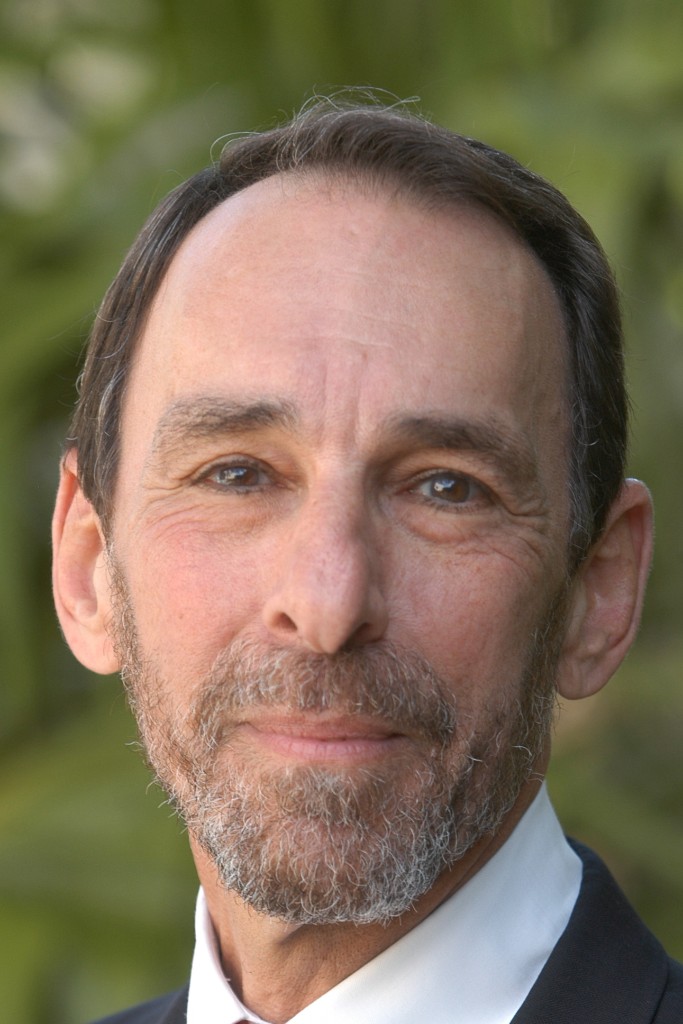
José Azel, Ph.D.

José Azel left Cuba in 1961 as a 13 year-old political exile in what has been dubbed Operation Pedro Pan - the largest unaccompanied child refugee movement in the history of the Western Hemisphere.  

He is currently dedicated to the in-depth analyses of Cuba's economic, social and political state, with a keen interest in post-Castro-Cuba strategies. Dr. Azel was a Senior Scholar at the Institute for Cuban and Cuban-American Studies (ICCAS) at the University of Miami, Jose Azel has published extensively on Cuba related topics.

In 2012 and 2015, Dr. Azel testified in the U.S. Congress on U.S.-Cuba Policy, and U.S. National Security.  He is a frequent speaker and commentator on these and related topics on local, national and international media.  He holds undergraduate and masters degrees in business administration and a Ph.D. in International Affairs from the University of Miami.

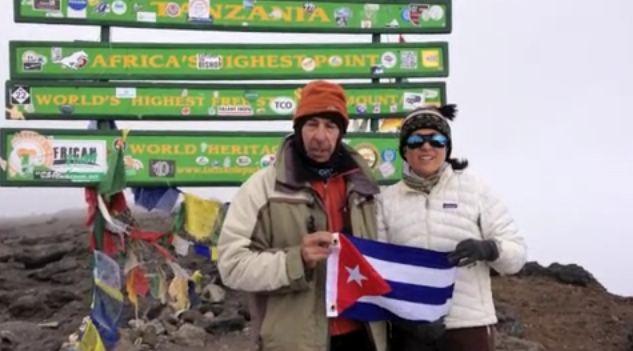
José along with his wife Lily are avid skiers and adventure travelers.  In recent years they have climbed Grand Teton in Wyoming, trekked Mt. Kilimanjaro in Tanzania and Machu Pichu in Peru.  They have also hiked in Tibet and in the Himalayas to Mt. Everest Base Camp.

They cycled St. James Way (
El Camino de Santiago de Compostela) and cycled alongside the Danube from Germany to Hungary and throughout southern France.  They have scuba dived in the Bay Islands off the Honduran coast and in the Galapagos Islands. Most recently, they rafted for 17 days 220 miles in the Grand Canyon. 

Their adventurers are normally dedicated to raise funds for causes that are dear to them. 

Watch Joe & Lily summit Kilimanjaro.

Books by Dr. José Azel
José Azel’s writings are touched with the wisdom of a master, and the charm of an excellent communicator. Anyone who wishes to understand why countries do, or do not, progress will find in this book the best explanations. And, from these readings emerge numerous inferences: How and why do the good intentions of leftist collectivism lead countries to hell? Why is liberty not a sub product of prosperity, but rather one of its causes?

If it was in my power, this work would be required reading for all college and university students, and I would also recommend its reading to all politicians, journalists, and policymakers. With his writings Azel accomplishes what was achieved in France by Frédéric Bastiat, and in the United States by Henry Hazlitt: Azel brings together common sense with intelligent observation, and academic substance. Stupendous,

Carlos Alberto Montaner

                                                                   BUY NOW
Los escritos de José Azel están tocados por la sabiduría de un maestro y la amenidad de un excelente comunicador. Cualquiera que desee entender por qué los países progresan, o no, encontrará en este libro las mejores explicaciones. De estas lecturas surgen numerosas inferencias: ¿Cómo y por qué las buenas intenciones del colectivismo de izquierda llevan a los países al infierno? ¿Por qué la libertad no es un subproducto de la prosperidad, sino una de sus causas?

Si estuviera en mis manos, esta obra sería de obligada lectura de todos los estudiantes universitarios, pero además, le recomendaría su lectura a todos los políticos, periodistas y policy makers. Con sus escritos Azel logra lo que Frédéric Bastiat consiguiera en Francia y Henry Hazlitt en Estados Unidos: aunar el sentido común, la observación inteligente y la enjundia académica. Estupendo.

Carlos Alberto Montaner
                                                           
Compre Aqui
"Liberty for beginners is much more than what the title promises. It is eighty themes touched with the wisdom of a master, and the charm of an excellent communicator. Anyone that wishes to understand why countries do, or do not progress, will find in this book the best explanations. Stupendous"

Carlos Alberto Montaner

"Libertad para novatos es mucho más de lo que promete el título. Son ochenta temas tocados con la sabiduría de un maestro y la amenidad de un excelente comunicador. Cualquier adulto que desee saber por qué progresan o se estancan los pueblos aquí encontrará las mejores explicaciones. Estupendo."

Carlos Alberto Montaner

Compre Aqui

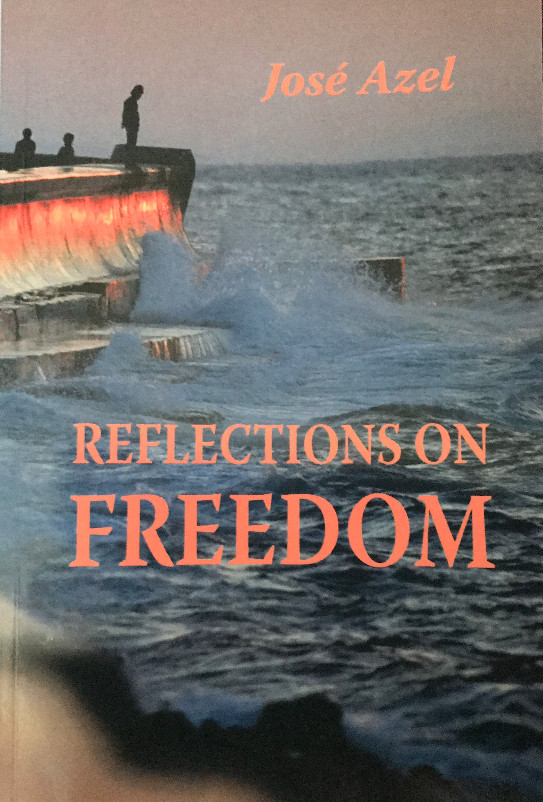
In Reflections on FreedomJosé Azel brings together a collection of his columns published in prestigious newspapers.  Each article reveals his heartfelt and personal awareness of the importance of freedom in our lives.  They are his reflections after nearly sixty years of living and learning as a Cuban outside Cuba. In what has become his stylistic trademark, Professor Azel brilliantly introduces complex topics in brief journalistic articles.
En Reflexiones sobre la libertad José Azel reúne una colección de sus columnas publicadas en prestigiosos periódicos. Cada artículo revela su percepción sincera y personal de la importancia de la libertad en nuestras vidas. Son sus reflexiones después de casi sesenta años viviendo y aprendiendo como cubano fuera de Cuba.  En lo que ha resultado ser característica distintiva de sus artículos, el Profesor Azel introduce con brillantez complejos temas en  breves artículos de carácter periodístico.
Mañana in Cuba is a comprehensive analysis of contemporary Cuba with an incisive perspective of the Cuban frame of mind and its relevancy for Cuba's future.
Pedazos y Vacíos is a collection of poems written in by Dr. Azel in his youth. Poems are in Spanish.