Free Cuba Now!

To promote a nonviolent transition to a Cuba that respects human rights, political and economic freedoms, and the rule of law.

 

More mass protests in Cuba, and the latest crackdown

More mass protests in Cuba
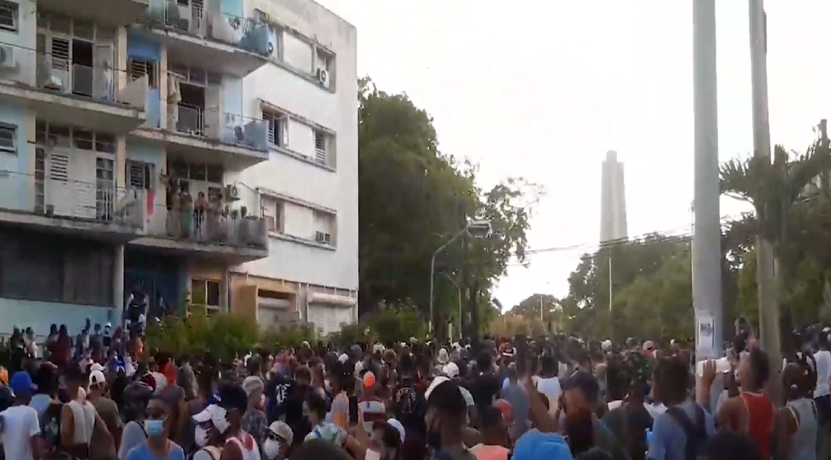
Protests in Havana against the government of Cuba [ 14ymedio ]

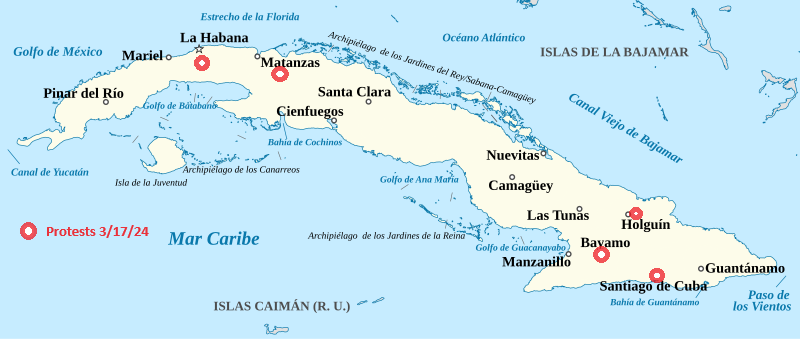
More mass protests broke out initially in Santiago de Cuba province on March 17, 2024, and despite mass mobilization of repressive forces, the existing new draconian penal code, and a mass exodus of hundreds of thousands of disaffected Cubans, protests spread to four others ( Artemisa, Granma, Holguin, and Matanzas ). Protests were largely shutdown by March 19th, and reports of arbitrary detentions are being documented.

Prisoners Defenders (PD) is reporting 32 arbitrary detentions between March 17th and March 19th connected to protests that broke out first in Santiago de Cuba and spread across the island. According to Javier Larrondo, director of Prisoners Defenders, a Spain based NGO, the province with the most arbitrary detentions identified during the 17M protests is Holguin with 13 detained, followed Santiago de Cuba (7), Havana (4), Cienfuegos (2) and Artemisa (2).
Austerity package imposed in March 2024

On the evening of January 9, 2024 Cuban officials announced that gas prices would be raised 528%, fares for trains and inter-provincial buses  would increase in cost by 180% in February 2024, This came on top of Prime Minister Manuel Marrero's December 2023 announcement that the MIPYMES, an acronym for new private businesses, would be subjected to higher taxes, higher import fees, and a 25% increase in the electric bill. Their internal surveillance mechanisms most likely told regime officials that it would lead protests, and the austerity measures were delayed until March 1, 2024. News also emerged at this time of shortages of flour and powdered milk.

CFC’s Janisset Rivero was interviewed by Scripps News Service.

"There is no economic freedom. There is no political freedom. There's nothing in Cuba," said Janisset Rivero with the Center for a Free Cuba, a nonprofit group of Cuban exiles pushing for regime change on the island.

Rivero migrated to Miami in the early 1990s and still has family in Cuba. "When I left the island, I couldn't see them again," she said. "So, I miss my family — the family I left there."  What is happening now is dire, Rivero said. 

Solidarity

On March 18th while protests continued in Cuba, Cubans and Cuban Americans protested outside the Cuban Embassy to demonstrate their solidarity with their counterparts in the island.

Journalist Jacqueline Quynh reported in a story for WUSA9, on March 21st that explained the reasons for the protests on the island, and in the District. 

"Imagine, 30 eggs cost you from 2,000 to 3,000 Cuban pesos, and people's pension for somebody over 65 is 2,500," Roque lamented. While he finds it difficult to discern the true extent of the situation, Roque is adamant that the people in Cuba need assistance.

"They're left to suffer, and if they speak out, they're rounded up and arrested," said John Suarez, Executive Director of the group. The organization is advocating for the release of prisoners they claim were peacefully protesting. "Our message to the American people and the Biden administration is to stop trying to placate the dictatorship and directly aid the Cubans on the island."


Cuban dictatorship’s double discourse

Santiago’s Communist Party boss, Beatriz Johnson, claimied that Cuban protesters weren’t against her, and Raul Castro’s hand picked “President” Miguel Díaz-Canel used Twitter to describe the protests as “various people” having “expressed their dissatisfaction with the situation of electrical service and food distribution.” He pledged, that his government stands ready “to attend to the complaints of our people.” This was for foreign consumption.

Domestically, a different tone, and message was sent regarding nonviolent demonstrators.

Sierra Maestra, the local official newspaper organ of the Communist Party in Santiago de Cuba, published an article that vilified the demonstratorswho took to the streets on March 17th across Cuba. Calling the protests a “degrading spectacle,” the author used all kinds of derogatory epithets to refer to the people who participated in the peaceful demonstrations. Mayté García Tintoré, the author of the officially sanctioned piece, called those who raised their voices against the blackouts, food shortages and mismanagement of the government “lazy”, “disengaged”, and “parasites”.

Freedom of expression punished.

Translation: “Hey Las Tunas what? You put it on 4 you turn it off five and six. Are we going to stay like that?”

Victor Manuel Hidalgo Cabrales posted the above cartoon on his Facebook page criticizing the power outages, and it has led to his ongoing detention in the Provincial Instruction in the province of Las Tunas in Cuba. He was approached by state security at his home within an hour of posting the cartoon, and asked to take it down. He agreed to, but was unable to do so due to a power outage, went to sleep and was woken up by a massive state security operation, and taken away.
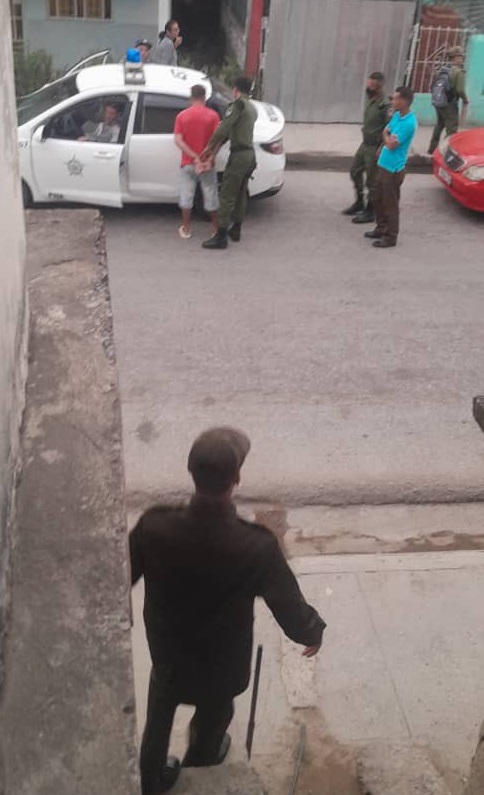
Victor Manuel Hidalgo Cabrales taken away by state security for a Facebook post.

The wife of Victor Manuel Hidalgo Cabrales made a video recording describing in detail how her husband was jailed for expressing an opinion in a Facebook post about the prolonged power outages.


What should be done next?

Cuban intellectuals on and off the island are speaking out, but their advice is not being heeded by officials.

The Christian Liberation Movement, a dissident movement based in Cuba, issued a statement on March 20, 2024 in which they call on the international community to take two concrete actions in response to regime repression.

  1. The immediate solidarity of the world with the legitimate right of Cubans to live in freedom and prosperity, expressed in concrete actions and not in political rhetoric without direct consequences in tyranny.

  2. A policy of exclusion and isolation of the Havana communist party regime in response to the continuous repression and segregation by the power group and the military.

The Christian Liberation Movement {MCL in Spanish] warns that continuing to legitimize and engage with the regime and continuing to accept its logic of imposed blackmail and violence, not taking the people of Cuba as a reference and independent voice, will lead to bloodshed, and once that is underway, it will be too late for the international community to act, but this warning by MCL means that they will not be able to say they didn’t know.



The Potemkin Village of Economic Rights

the AZEL

PERSPECTIVE

Commentary on Cuba's Future, U.S. Foreign Policy & Individual Freedoms - Issue 349 B
 
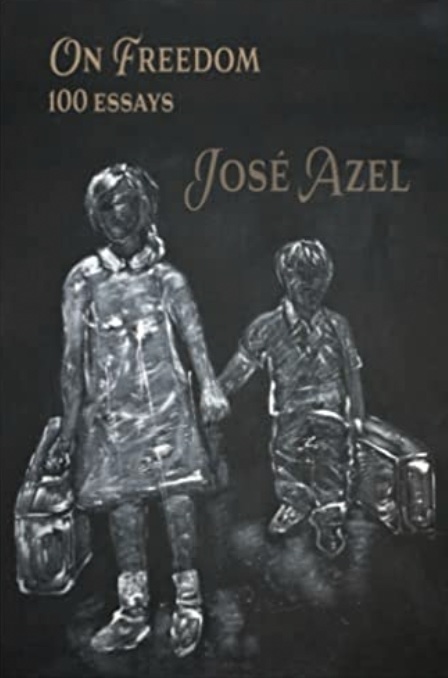
José Azel's latest books "On Freedom" and "Sobre La Libertad" are now available on Amazon. 

The Potemkin Village of Economic Rights

ShareShare
TweetTweet
ForwardForward
In politics and economics, a Potemkin village means a hollow or false construct.  Literally or figuratively, a construction created to deceive people into thinking that a situation is better than it really is. The term originates from stories that the Russian military leader Grigory Potemkin, who had been a lover of Empress Catherine II, built fake portable villages to impress the Empress during her journey to Crimea in 1787. According to the myth, the fake villages were disassembled after Katherine passed them and reassembled farther downstream on her route along the banks of the Dnieper River.
Modern examples abound, for example, when visitors to communist countries were shown only what the regimes wanted them to see. In North Korea, the village of Kijong-dong, also known as the Peace Village, is a propaganda Potemkin village designed to encourage pro-North Korean defections from South Korea. During World War II, Nazi Germany built a Potemkin village concentration camp (Theresienstast) that could be shown to the Red Cross. One element of the infamous Enron scandal was that the company maintained a fake trading floor in its headquarters to impress visiting Wall Street analysts.
 
By labeling the idea of “economic rights” as a Potemkin village, I want to show that classifying certain activities as economic rights is a false and dangerous construct that diminishes our political rights. Let’s explore, rights can be viewed as liberties or as claims.
 
A liberty-right is the freedom to do something without imposing any obligation on anyone else, for example the right to free speech. Liberty-rights are activities that may not be violated by the state.  In contrast, a claims-right imposes an obligation on someone else to do something for the benefit of the claims-right holder. For instance, if you have the right to receive welfare benefits of some sort, that requires someone else to give up a portion of their income to pay for your benefits.
 
Historically, rights were viewed as the claims of individuals against the state. In more recent times, the notion of rights has ben expanded to include benefits demanded from the state such as welfare benefits, or medical care. The problem is that this expanded definition of rights undermines our basic political rights. Commendable as the idea may appear, economic rights, such as the right to housing, or to work, or to sustenance, are contrary to freedom because they necessitate government intervention.
 
Notice that these new economic rights are not freedom from state interference. They are the opposite; these rights require state interference. They represent benefits that can only be bestowed by the state. As columnist Charles Krauthammer explained in a 1993 Washington Post column: “Economic rights are not claims of the individual against the state. They are claims on the state, demands for things to be granted by the state to the individual.  As such, they guarantee the individual’s dependence on the state for the necessities of life and thus are instruments for increasing state power over the individual.”
 
It is for this reason, of control over the individual, that non-democratic regimes promote the idea of economic rights. It gives them the justification to sacrifice political rights in the altar of economic rights. Thus, China, Vietnam, Cuba, and others, deny the universality of political rights.  To these regimes, political rights must be subservient to the economic rights that the state promotes as its reason for being.  They cannot be bothered with those burdensome and restrictive political rights. Non-democratic regimes are a Potemkin village.
 
History and reality show that, societies that treasure political rights are also the societies that offer the best economic and social possibilities for the citizenry. Sadly, some societies, or elements of society, have come to fancy political organizations that offer to give them their daily bread. They prefer polities that decree life’s purposes, rather than to face the burdens, responsibilities, and risks of a free life. These societies reject the freedom which leaves the goals of life up to the individual.  They deceive people into believing that their situation is better than it really is, in their Potemkin village.

Please let us know if you Like Issue 349 B - The Potemkin Village of Economic Rights on Facebook this article.
We welcome your feedback.
Abrazos,
 
Lily & José
 
(click on the name to email Lily or Jose)
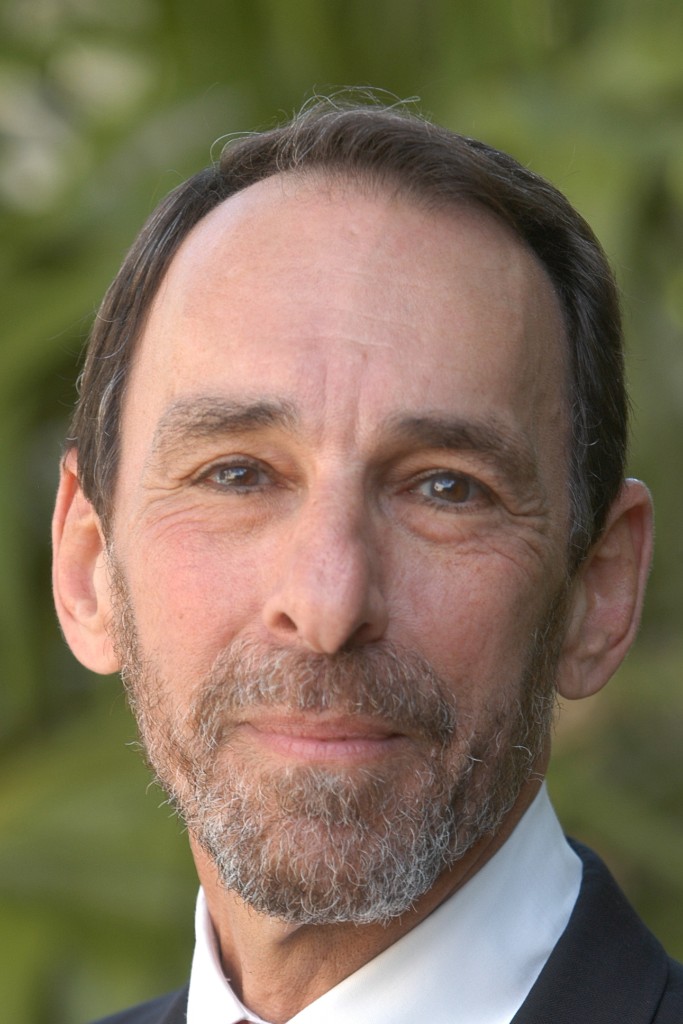
José Azel, Ph.D.

José Azel left Cuba in 1961 as a 13 year-old political exile in what has been dubbed Operation Pedro Pan - the largest unaccompanied child refugee movement in the history of the Western Hemisphere.  

He is currently dedicated to the in-depth analyses of Cuba's economic, social and political state, with a keen interest in post-Castro-Cuba strategies. Dr. Azel was a Senior Scholar at the Institute for Cuban and Cuban-American Studies (ICCAS) at the University of Miami, Jose Azel has published extensively on Cuba related topics.

In 2012 and 2015, Dr. Azel testified in the U.S. Congress on U.S.-Cuba Policy, and U.S. National Security.  He is a frequent speaker and commentator on these and related topics on local, national and international media.  He holds undergraduate and masters degrees in business administration and a Ph.D. in International Affairs from the University of Miami.

José along with his wife Lily are avid skiers and adventure travelers.  In recent years they have climbed Grand Teton in Wyoming, trekked Mt. Kilimanjaro in Tanzania and Machu Pichu in Peru.  They have also hiked in Tibet and in the Himalayas to Mt. Everest Base Camp.

They cycled St. James Way (
El Camino de Santiago de Compostela) and cycled alongside the Danube from Germany to Hungary and throughout southern France.  They have scuba dived in the Bay Islands off the Honduran coast and in the Galapagos Islands. Most recently, they rafted for 17 days 220 miles in the Grand Canyon. 

Their adventurers are normally dedicated to raise funds for causes that are dear to them. 

Watch Joe & Lily summit Kilimanjaro.

Books by Dr. José Azel
José Azel’s writings are touched with the wisdom of a master, and the charm of an excellent communicator. Anyone who wishes to understand why countries do, or do not, progress will find in this book the best explanations. And, from these readings emerge numerous inferences: How and why do the good intentions of leftist collectivism lead countries to hell? Why is liberty not a sub product of prosperity, but rather one of its causes?

If it was in my power, this work would be required reading for all college and university students, and I would also recommend its reading to all politicians, journalists, and policymakers. With his writings Azel accomplishes what was achieved in France by Frédéric Bastiat, and in the United States by Henry Hazlitt: Azel brings together common sense with intelligent observation, and academic substance. Stupendous,

Carlos Alberto Montaner

                                                                   BUY NOW
Los escritos de José Azel están tocados por la sabiduría de un maestro y la amenidad de un excelente comunicador. Cualquiera que desee entender por qué los países progresan, o no, encontrará en este libro las mejores explicaciones. De estas lecturas surgen numerosas inferencias: ¿Cómo y por qué las buenas intenciones del colectivismo de izquierda llevan a los países al infierno? ¿Por qué la libertad no es un subproducto de la prosperidad, sino una de sus causas?

Si estuviera en mis manos, esta obra sería de obligada lectura de todos los estudiantes universitarios, pero además, le recomendaría su lectura a todos los políticos, periodistas y policy makers. Con sus escritos Azel logra lo que Frédéric Bastiat consiguiera en Francia y Henry Hazlitt en Estados Unidos: aunar el sentido común, la observación inteligente y la enjundia académica. Estupendo.

Carlos Alberto Montaner
                                                           
Compre Aqui
"Liberty for beginners is much more than what the title promises. It is eighty themes touched with the wisdom of a master, and the charm of an excellent communicator. Anyone that wishes to understand why countries do, or do not progress, will find in this book the best explanations. Stupendous"

Carlos Alberto Montaner

"Libertad para novatos es mucho más de lo que promete el título. Son ochenta temas tocados con la sabiduría de un maestro y la amenidad de un excelente comunicador. Cualquier adulto que desee saber por qué progresan o se estancan los pueblos aquí encontrará las mejores explicaciones. Estupendo."

Carlos Alberto Montaner

Compre Aqui

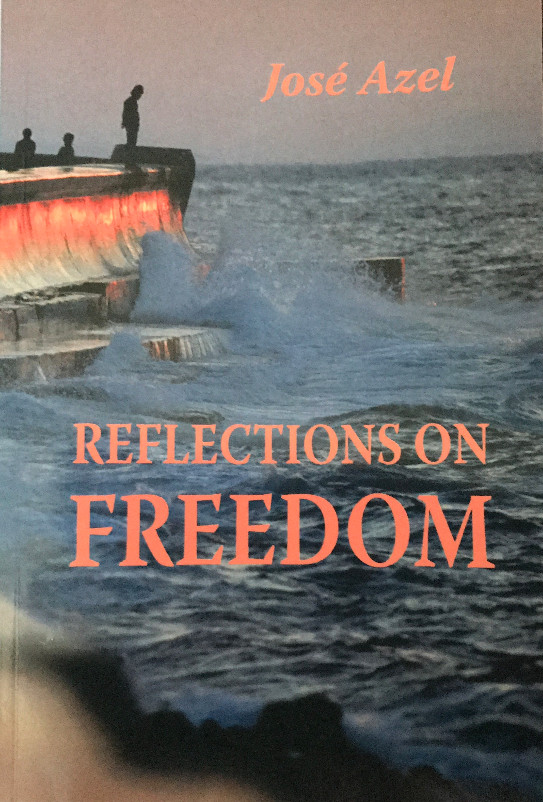
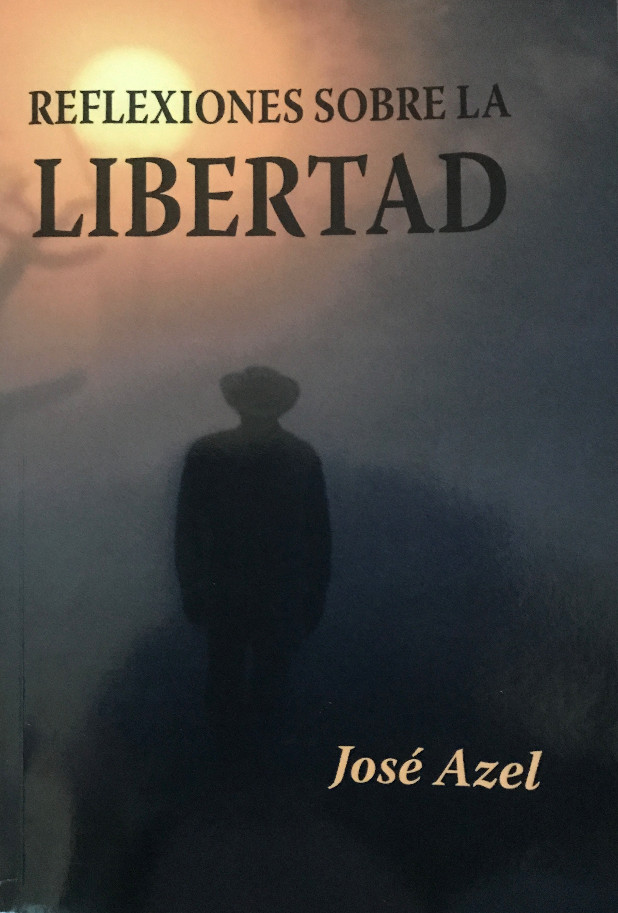
In Reflections on FreedomJosé Azel brings together a collection of his columns published in prestigious newspapers.  Each article reveals his heartfelt and personal awareness of the importance of freedom in our lives.  They are his reflections after nearly sixty years of living and learning as a Cuban outside Cuba. In what has become his stylistic trademark, Professor Azel brilliantly introduces complex topics in brief journalistic articles.
En Reflexiones sobre la libertad José Azel reúne una colección de sus columnas publicadas en prestigiosos periódicos. Cada artículo revela su percepción sincera y personal de la importancia de la libertad en nuestras vidas. Son sus reflexiones después de casi sesenta años viviendo y aprendiendo como cubano fuera de Cuba.  En lo que ha resultado ser característica distintiva de sus artículos, el Profesor Azel introduce con brillantez complejos temas en  breves artículos de carácter periodístico.
Mañana in Cuba is a comprehensive analysis of contemporary Cuba with an incisive perspective of the Cuban frame of mind and its relevancy for Cuba's future.
Pedazos y Vacíos is a collection of poems written in by Dr. Azel in his youth. Poems are in Spanish.
To friend, follow or email author click on the icons below:
Facebook
Twitter
Email
Click here to:
View this email in your browser

Access past issues
Access automated translations
Facilitate sharing
Print from your browser
Copyright © 2022 Azel & Associates, All rights reserved.
If you are receiving this email it is because we met you at some point on an adventure.

Our mailing address is:
Azel & Associates
440 Sawgrass Parkway, Suite 106
Sunrise, FL 33325